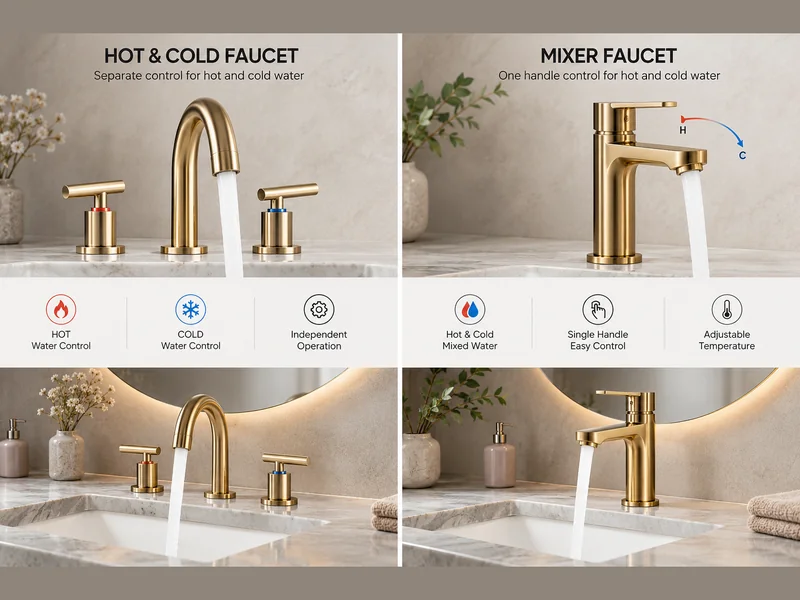
Specifying the wrong tap can cost a project far more than the fitting itself — in extra plumbing, callbacks and early replacement. For B2B buyers, the choice between a cold water tap and a mixer tap is rarely about style. It comes down to inlet count, application, water pressure, certification and total installed cost. This guide compares both tap types from a procurement perspective — supply requirements, installation, compliance, MOQ and sourcing — so you can specify the right product for every zone of a project and buy it without expensive surprises.
Quick answer
A cold water tap uses a single cold-water inlet and delivers cold water only. It is the lowest-cost, lowest-maintenance option for public restrooms, utility sinks and outdoor points. A mixer tap combines hot and cold supplies in one body — single-lever, dual-handle or thermostatic — to deliver adjustable temperature for bathrooms, hotel rooms and kitchens. Use cold taps where only cold water is needed; specify mixers wherever temperature control is expected.
Cold Water Tap vs Mixer Tap: The Core Difference
Both fittings deliver water at the outlet, but they solve different problems. A cold water tap is a single-supply fixture: one inlet, one control, cold water only. A mixer tap is a dual-supply fixture: hot and cold lines enter one body and are blended through a cartridge before reaching the spout. That one design difference drives almost every downstream decision — plumbing runs, wall openings, unit cost, maintenance and compliance.
| Procurement parameter |
Cold water tap |
Mixer tap |
| Water inlets |
1 (cold) |
2 (hot + cold) |
| Temperature control |
None — cold only |
Adjustable via cartridge |
| Typical flow rate |
6–12 L/min |
6–12 L/min, set by aerator |
| Minimum supply pressure |
0.5 bar |
0.5–1.0 bar; low-pressure cartridge available |
| Connection thread |
1/2″ BSP or NPT |
1/2″ BSP or NPT — confirm market |
| Certification focus |
CE, ACS, Watermark |
CE, ACS, Watermark, WRAS; TMV in healthcare |
| Typical commercial use |
Public restrooms, utility, outdoor |
Hotel rooms, residential, kitchens |
What Is a Cold Water Tap?
A cold water tap — also called a cold tap, pillar cock or bib tap depending on mounting — connects to a single cold-water supply. It has no mixing cartridge: the handle opens a valve or ceramic headpart and water flows at mains temperature. Because there is no hot line, installation is simpler, the bill of materials is shorter and there is one fewer component to fail. In B2B procurement, cold taps are usually specified by mounting type (deck, wall, pillar), operation (manual, self-closing, sensor) and material (brass or stainless steel). For project schedules, FAAO’s grifos de agua fría range covers deck-mounted pillar cocks, wall-mounted bib taps and self-closing models in brass and stainless steel.
Where Cold Water Taps Make Sense
- Public and commercial restrooms where only cold water is plumbed
- Utility and janitor sinks, mop points and service areas
- Outdoor taps, garden points and wash-down stations
- Industrial hand-wash and process points where temperature is not required
- Drinking-water points with a dedicated cold supply
What Is a Mixer Tap?
A mixer tap combines hot and cold water inside a single body and blends them through a cartridge before the water leaves the spout. The most common commercial format is the single-lever monobloc: one handle controls both flow and temperature. Dual-handle mixers separate flow and temperature across two valves, while thermostatic mixers hold a set outlet temperature within a narrow band — the default choice for hotels, hospitals and any project where scald protection matters. Mixers need two supply lines and, in most markets, a non-return valve on each inlet to prevent cross-contamination. FAAO’s basin mixer faucets are built around branded ceramic cartridges for consistent temperature control.
Mixer Tap Variants for Commercial Projects
- Single-lever monobloc — basin and kitchen; fastest to operate with one hand
- Dual-handle mixer — separate hot and cold valves, traditional appearance
- Thermostatic mixer — fixed outlet temperature and anti-scald protection for hotels and healthcare
- Sensor or touchless mixer — hygiene-critical public washrooms
- Concealed mixer — valve hidden in the wall, only the trim visible
Cost Comparison: Purchase Price vs Total Installed Cost
Unit price is the least reliable way to compare these two products. A cold tap typically costs less to buy, but the real difference sits in installed cost: a mixer needs a second supply line, a hot-water source, additional labour and, often, non-return valves and a thermostatic element.
- Purchase price: cold tap lower; mixer higher because of the cartridge and second inlet
- Plumbing: cold tap needs one run; mixer needs two runs plus hot-water provision
- Labour: cold tap is faster to install; mixer takes longer and has more connections to test
- Maintenance: cold tap has fewer parts; the mixer cartridge is a wear item
- Energy: cold tap has no energy input; mixer depends on the hot-water system
- Replacement cycle: cold taps last longer in low-use areas; mixer cartridges need servicing sooner in hard-water areas
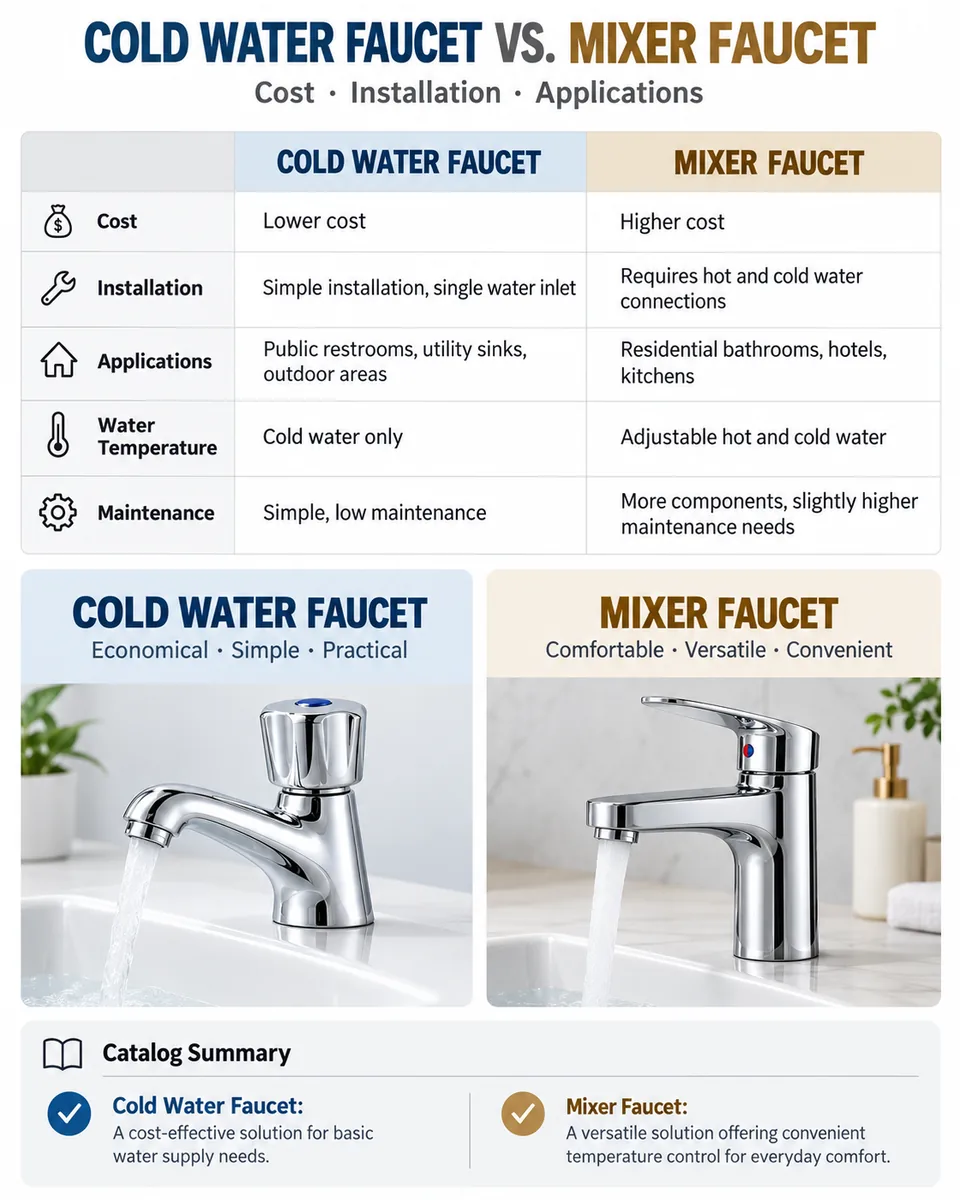
Figure 1 — Cost, installation and application comparison for cold water and mixer faucets.
In practice, the lower purchase price of a cold tap rarely justifies installing one where users expect hot water. Match the fixture to the zone first, then optimise cost within that decision.
Installation & Plumbing Requirements
Installation is where the two diverge most. A cold tap needs one supply, one wall or deck opening and a single connection. A mixer needs hot and cold supplies at the same point, correct spacing for the body and — on concealed models — a wall cavity deep enough for the valve body.
Thread standard is a frequent source of returns in export orders. BSP (British Standard Pipe) and NPT (National Pipe Taper) look similar but are not interchangeable: BSP uses a 55° thread angle, while NPT uses a 60° tapered profile. Metric threads such as M16 × 1.5 appear on some European fittings. Always confirm thread type, pitch and sealing method (washer or PTFE tape) against the destination market before production starts.
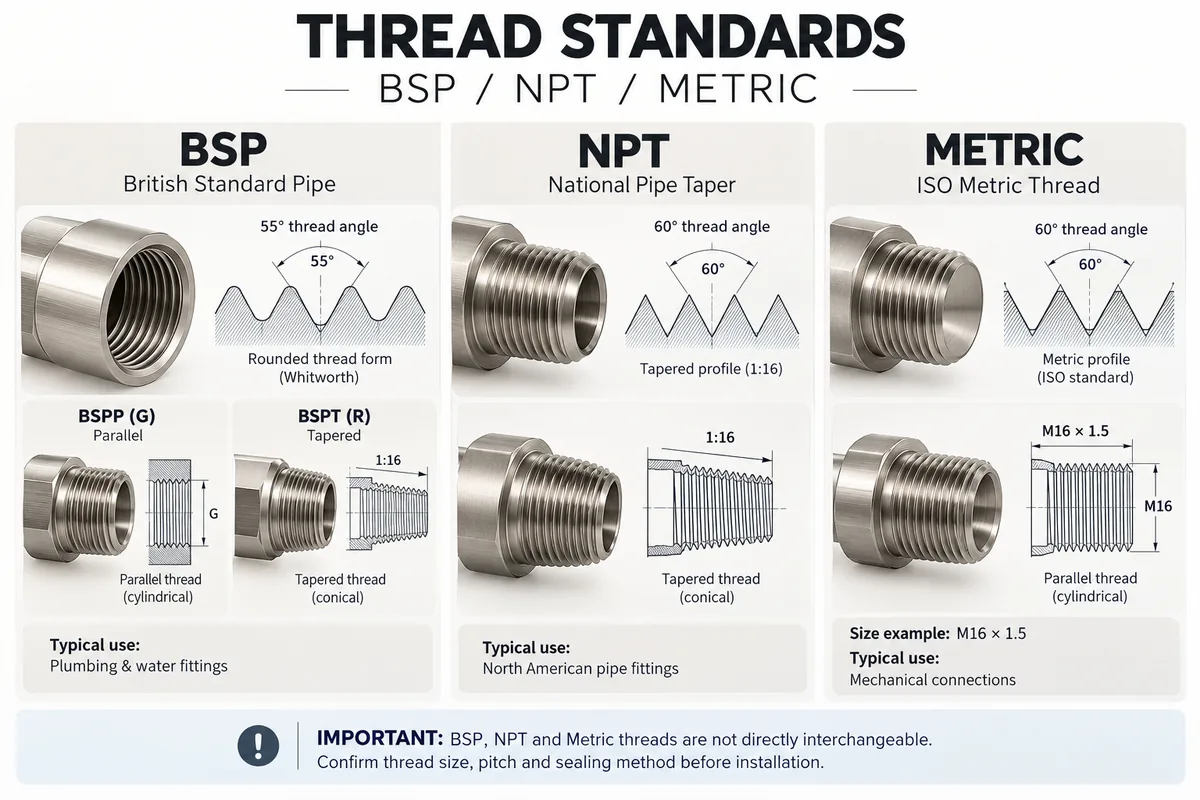
Figure 2 — BSP, NPT and metric thread profiles; they are not directly interchangeable.
Water Pressure, Flow Rate & Compliance
Pressure and flow decide whether a tap performs as specified. Most commercial mixers are rated for 0.5–5 bar; low-pressure systems need a dedicated low-pressure cartridge, otherwise flow collapses on the hot side. Flow rate is increasingly regulated too: many markets cap basin taps at around 6 L/min, and project specifications may call for a specific aerator.
- CE marking — EU and EEA market access
- SCA — France, potable-water contact
- Watermark — Australia and New Zealand
- WRAS — UK water regulations
- Lead-free / NSF/ANSI 61 — drinking-water contact in North America
- TMV — thermostatic mixing valve for scald protection in healthcare and hospitality
For buyers importing into the EU, certification documents should be requested at quotation stage, not after the deposit. FAAO supplies CE, ACS and Watermark compliant ranges and can provide test reports and declarations with the order; our guide to CE-certified tapware suppliers explains what to verify before placing a purchase order.
Which Tap Should You Specify? Decision Framework
Start with the zone, not the product. A single building usually needs both types, and the specification should follow the user and the plumbing, not a blanket standard.
- Public or high-traffic restrooms: cold water tap, ideally self-closing or sensor — no hot-water run and lower vandalism risk
- Hotel guest bathrooms: thermostatic or concealed mixer — stable temperature and scald safety
- Residential bathrooms: single-lever basin mixer
- Kitchens, domestic and commercial: single-lever pull-down or pull-out mixer
- Utility, outdoor and industrial: cold bib tap or pillar cock
- Healthcare and care homes: thermostatic mixer with a certified TMV
For a deeper comparison of basin formats, materials and cartridge options, see our complete basin faucet buying guide.
Kitchens: Where Mixers Usually Win
Kitchens are the clearest case for a mixer. Users need warm water for washing, hot water for rinsing and a single hand to switch between them while holding a pot or pan. A single-lever pull-down mixer is the default B2B specification, while dual-handle models remain common in traditional and hospitality interiors.
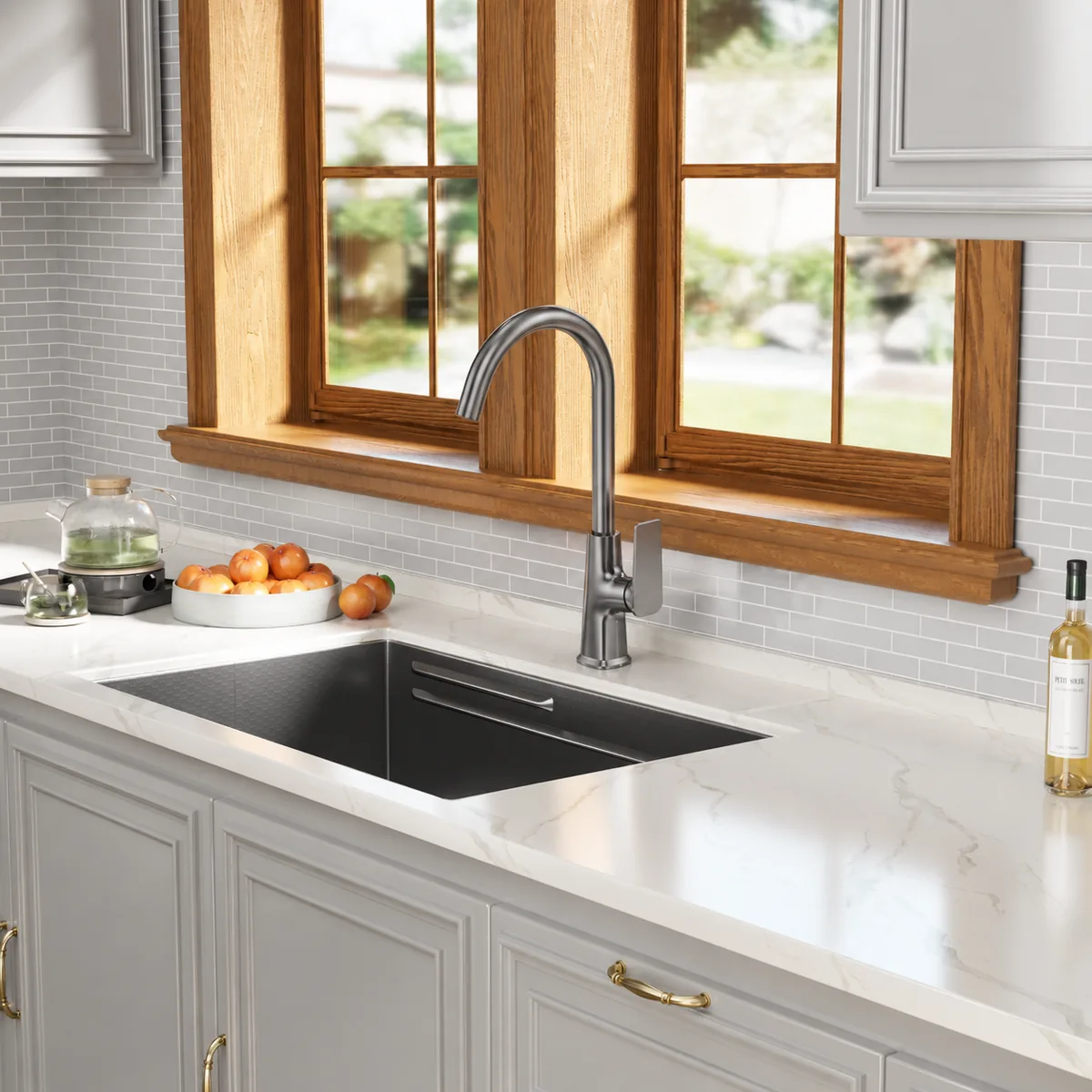
Figure 3 — Single-lever kitchen mixer tap over an undermount sink.
B2B Sourcing Checklist
Once the type is fixed, the specification and sourcing questions are the same for both products.
- Body material: dezincification-resistant brass such as CW617N, or 304/316 stainless steel
- Cartridge: branded ceramic cartridge (Sedal, Kerox or equivalent) for mixer taps
- Finalizar: chrome, brushed nickel, matte black or PVD gold — confirm salt-spray hours
- Aerator: flow rate and anti-limescale type
- Certification: CE, ACS, Watermark or WRAS documents at quotation
- MOQ: confirm per model and per finish, including mixed-container options
- Lead time: standard versus OEM/ODM, with extra time for tooling on custom finishes
- Samples: pre-production sample and written approval before mass production
- Spare parts: cartridges, aerators and handles available after delivery
- Packaging and warranty: retail or project packaging, logo and manual
FAAO has manufactured sanitary ware since 2001 from a 20,000 m² facility, exporting to more than 80 countries with CE, ACS, Watermark and ISO 9001 certification and more than 200 patents. OEM and ODM programmes cover body design, finish and packaging, with cartridge and material options confirmed at sampling.
Frequently Asked Questions
Is a mixer tap more expensive than a cold water tap?
Yes, both to buy and to install. A mixer includes a mixing cartridge and needs two supply lines plus a hot-water source, so its installed cost is typically higher. The premium is justified wherever users expect adjustable temperature.
Can a cold water tap be converted into a mixer tap?
Not directly. Conversion requires a second hot-water supply line, a different body with a mixing cartridge and usually a new wall or deck opening. In most projects it is cheaper to replace the fitting than to convert it.
Which tap is better for commercial restrooms?
For high-traffic public restrooms, a cold water tap — ideally self-closing or sensor-operated — is usually the better choice: no hot-water run, lower vandalism risk and simpler maintenance. Mixers are specified where hot water is expected, such as staff or hotel facilities.
Do mixer taps work with low water pressure?
Only with the correct cartridge. Standard mixers are rated from roughly 0.5–1.0 bar; on low-pressure or gravity systems, specify a low-pressure cartridge or a dedicated low-pressure model, otherwise hot-side flow will be weak.
What certifications should B2B buyers require?
It depends on the destination market: CE for the EU, ACS for France, Watermark for Australia and New Zealand, WRAS for the UK and lead-free or NSF 61 for North American drinking water. Always request certificates and test reports together with the quotation.
Conclusión
Cold water taps and mixer taps are not competitors — they are different tools for different zones. Cold taps win on cost, simplicity and durability where only cold water is needed; mixers win wherever users expect temperature control, from hotel bathrooms to kitchens. The procurement decision should follow the application, then the specification: material, cartridge, thread standard, certification and MOQ. Get those right at quotation stage and the fitting becomes the cheapest part of the project. Get them wrong and it becomes the most expensive.
Related Resources
 Teléfono: +86 13868315922
 Correo electrónico: [email protected]
 Spanish
 English
 French
 Russian
 Portuguese