


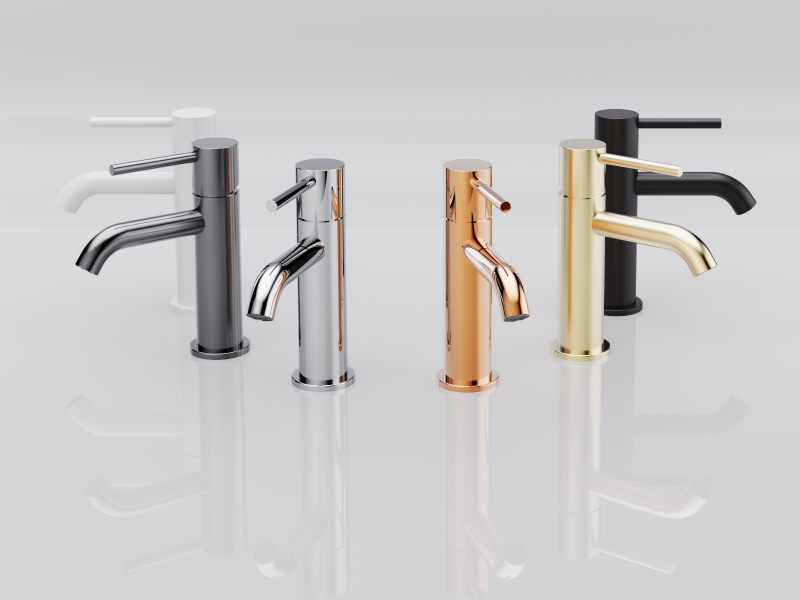
Navigating the global faucet market means more than choosing a style. B2B buyers must align every product with regional standards, certification schemes, flow-rate limits, and local buyer preferences. This guide maps the requirements for the Americas, European Union, Asia-Pacific, and Middle East — so you can source compliant faucets with confidence and avoid costly customs or inspection failures.
For importers, wholesalers, and project procurement managers, regional faucet standards are not optional. They determine whether a shipment clears customs, passes local building inspections, and qualifies for government or commercial tenders. A faucet certified for Europe may lack the correct markings for Australia. A popular finish in the United States may underperform in the humid climates of Southeast Asia.
Beyond compliance, local preferences shape buying decisions. North American buyers often expect widespread three-hole configurations and WaterSense labels. European buyers prioritize single-lever EN-certified mixers and chrome or brushed nickel finishes. Middle East buyers look for SASO-marked products that handle high mineral-content water. Understanding both the technical and commercial landscape is the first step to winning bids.
FAAO manufactures certified basin faucets, kitchen faucets, shower systems, and bathroom accessories for more than 80 countries. Our production is built around the certification requirements of each destination market, so OEM and ODM partners receive products that are ready for local compliance from the first shipment.
North America operates under a dual-layer system. The United States and Canada require faucets that contact drinking water to comply with NSF/ANSI 61, which limits lead and other contaminants leaching from wetted surfaces. NSF/ANSI 372 further restricts weighted average lead content to 0.25% or less. In practice, 48 U.S. states reference NSF/ANSI 61 in plumbing codes, making it a de facto national requirement.
cUPC (certified Uniform Plumbing Code) and UPC listings show that a product has been tested to ASME A112.18.1/CSA B125.1 for performance, durability, and safety. These marks are widely required by wholesalers, contractors, and building inspectors. For eco-conscious projects, the EPA’s WaterSense label certifies that a faucet meets a maximum flow rate of 1.5 gallons per minute (gpm) at 60 psi — lower than the federal standard of 2.2 gpm.
ADA-compliant lever or sensor-operated controls are also common requirements for commercial and public buildings. Finish preferences in the United States and Canada lean toward chrome, brushed nickel, matte black, and champagne bronze, with widespread and centerset configurations dominating residential bathrooms.

Brazil requires INMETRO certification for many plumbing products, including faucets that contact drinking water. Mexico’s NOM standards set requirements for materials, performance, and labeling. Smaller Central and South American markets often accept CE or NSF-certified products with local importer declarations, but buyers should always verify the specific port-of-entry rules before shipping.
Design preferences across Latin America favor polished chrome and classic rounded forms, often with a stronger decorative aesthetic than in North America. Price sensitivity is higher, so balanced cost-performance product lines perform best.
Need NSF and cUPC-Ready Faucets for North America?
FAAO supplies kitchen, basin, and shower faucets engineered for North American compliance. OEM/ODM programs include material selection and documentation support.
The European market is unified at the top level by the CE mark, which for faucets typically involves compliance with EN 817 (sanitary tapware — mechanical mixing valves) and EN 200 (single taps and combination taps). CE marking is generally self-declarable by the manufacturer based on internal testing and technical documentation, though third-party testing is common for B2B credibility.
France adds the ACS (Attestation de Conformité Sanitaire) requirement, which evaluates the migration of substances into drinking water. The United Kingdom historically required WRAS approval, and many projects still specify WRAS-listed products even post-Brexit. Germany, the Netherlands, and Scandinavia often look for additional local approvals such as DVGW, KIWA, or SB.
Water-efficiency requirements are tightening. The EU Ecodesign framework and national building codes increasingly restrict flow rates for basin and kitchen faucets. Typical acceptable rates range from 3 to 6 liters per minute for basin mixers, depending on the country and application.
European design preferences strongly favor single-lever mixers, tall basin faucets, and minimalist lines. Chrome remains dominant, but brushed nickel, matte black, and gunmetal grey are growing rapidly in premium segments. Thermostatic shower valves and concealed shower systems are also standard expectations in higher-end residential and hotel projects.
Sourcing CE and ACS-Ready Faucets for Europe?
FAAO’s faucet lines are designed around EN standards with finishes and configurations that match European project specifications.
Australia and New Zealand operate one of the world’s strictest plumbing product regimes. Any faucet connected to drinking water must carry WaterMark Level 1 certification under AS/NZS 3718. WaterMark is not self-declarable — products must be tested by an accredited body such as IAPMO, SAI Global, or NSF. In addition, faucets must display a WELS star rating that communicates water efficiency, with minimum flow-rate thresholds tied to star ratings.
Penalties for non-compliance are severe, with fines reaching up to AUD 500,000 for companies. Buyers should always verify WaterMark license numbers in the official ABCB database.
China’s domestic market follows GB standards, including GB 18145 for ceramic cartridge faucets. Requirements focus on sealing performance, hydrostatic pressure, plating corrosion resistance, and metal precipitation limits. The CCC mark does not apply to most faucets, but local testing reports are often required for large projects and e-commerce platforms.
Domestic preferences vary by region. Tier-one cities increasingly favor matte black, brushed gold, and white finishes, while chrome remains strong in cost-sensitive markets. Smart faucets with touchless and temperature-display functions are gaining share in commercial and high-end residential projects.
Japan uses JIS standards and places strong emphasis on water-saving performance and precision machining. South Korea requires KC certification for certain sanitary products. Southeast Asian markets such as Vietnam, Thailand, and the Philippines generally accept CE or WaterMark-certified products with importer documentation, though some large government projects specify local testing.

The Middle East is a high-value market with its own set of national standards. Saudi Arabia requires SASO approval and the Saudi Quality Mark for many plumbing products. The United Arab Emirates uses ESMA (ECAS) certification, and Qatar has its own QS standards. Oman, Kuwait, and Bahrain each operate similar conformity-assessment programs.
These standards typically cover mechanical performance, material safety, and labeling in Arabic. Because many Middle East countries experience high water hardness and elevated temperatures, durability testing often emphasizes corrosion resistance, cartridge longevity, and surface finish stability under harsh conditions.
Design preferences lean toward luxury finishes, ornate decorative details, and premium packaging. Gold, rose gold, and black-chrome combinations are popular in the Gulf states. High-rise hotels, villas, and mixed-use developments represent the strongest B2B demand.
Planning a WaterMark or SASO Faucet Project?
FAAO supports Middle East and Asia-Pacific certification paths with tested product families and full compliance documentation.
Finish choice is not only aesthetic — it affects resale, maintenance, and regional acceptance. Chrome remains the global default because of its durability and universal appeal. However, regional trends are clearly diverging.
Mounting configurations also vary. North America uses NPT threads and widespread three-hole layouts. Europe and Asia predominantly use G1/2 BSP threads and single-hole single-lever designs. Matching the correct thread type, cartridge specification, and mounting hole pattern is essential to avoid installation failures.

Use the checklist below to compare certification, flow-rate, thread, and finish requirements at a glance. Expand each region for the details that matter most to B2B buyers.
Key certifications: NSF/ANSI 61, NSF/ANSI 372, cUPC/UPC, WaterSense, ADA (commercial)
Typical flow rate: ≤ 2.2 gpm federal; ≤ 1.5 gpm WaterSense
Thread standard: NPT (1/2″ common)
Popular finishes: Chrome, brushed nickel, matte black, champagne bronze
Common pitfall: Assuming a CE-certified faucet will satisfy U.S. state plumbing codes.
Key certifications: CE (EN 817 / EN 200), ACS for France, WRAS for UK projects, DVGW/KIWA in some markets
Typical flow rate: 3–6 L/min for basin mixers depending on national code
Thread standard: G1/2 BSP
Popular finishes: Chrome, brushed nickel, matte black, gunmetal grey
Common pitfall: Self-declared CE without proper technical file or ACS for French distribution.
Key certifications: WaterMark + WELS (Australia/NZ), GB 18145 (China), JIS (Japan), KC (South Korea)
Typical flow rate: Australia WELS 4.5–9 L/min; China and Japan 4–7 L/min common
Thread standard: G1/2 BSP (most); some local variations
Popular finishes: Chrome, brushed gold, matte black, white
Common pitfall: Shipping to Australia without WaterMark Level 1 — can result in fines and recalls.
Key certifications: SASO (Saudi Arabia), ESMA/ECAS (UAE), QS (Qatar), plus importer-specific requirements
Typical flow rate: Varies by country; often aligned with EN or local water-efficiency rules
Thread standard: G1/2 BSP most common
Popular finishes: Gold, rose gold, black chrome, polished chrome
Common pitfall: Missing Arabic labeling or local conformity certificate at customs.
Ready to Source Compliant Faucets for Any Region?
FAAO combines 20+ years of manufacturing experience with multi-market certifications. Tell us your destination country and we will match the right product family.
FAAO operates a 20,000-square-meter facility with ISO 9001 quality management and SGS product testing. Our faucet portfolio includes products designed for WaterMark, CE, ACS, NSF, cUPC, and SASO pathways, with material and cartridge selections that align with each standard’s requirements.
For B2B partners, we provide technical files, test reports, compliance declarations, and OEM/ODM customization. Whether you need a WaterMark-certified faucet for Australia, a low-lead NSF-compliant line for the United States, or a custom finish for a Middle East hotel project, our engineering team can match the specification.
Working with an experienced faucet manufacturer in China reduces certification delays, lowers rework risk, and protects your brand from compliance failures in the destination market.
The global faucet market rewards buyers who understand regional standards before they place an order. From NSF/ANSI 61 in North America to WaterMark in Australia and SASO in the Middle East, each market has clear technical and documentation expectations. Pair the right certifications with local finish and design preferences, and you will avoid customs rejections while building a stronger distribution position.
NSF/ANSI 61 is the most widely required certification for faucets that contact drinking water in the United States and Canada. It limits the leaching of lead and other contaminants. Many buyers also require cUPC listing and WaterSense labeling for water-efficient projects.
No. Australia requires WaterMark Level 1 certification under AS/NZS 3718 for plumbing products connected to drinking water. CE marking alone is not recognized. Faucets must also display a compliant WELS star rating before retail.
Premium finishes dominate the Middle East market, including gold, rose gold, black chrome, and polished chrome. Ornate decorative designs and strong packaging are also important for villa, hotel, and retail positioning.
Yes. North America predominantly uses NPT threads, while Europe, Asia-Pacific, and the Middle East typically use G1/2 BSP threads. Supplying the wrong thread type can cause installation failures and returns, so it must be confirmed before production.
Always verify certificates through the official database of the issuing body — the ABCB WaterMark database, NSF product listings, or the relevant European laboratory. Reputable manufacturers will provide full test reports with raw data and license numbers, not just marketing PDFs.
 Optimized by Seraphinite Accelerator
 Telefone:
  E-mail:
  Portuguese
  English
  Spanish
  French
  Russian