Bienvenido a FAAO Sanitary Ware Co., Ltd.
 Teléfono: +86 13868315922
  Correo electrónico: [email protected]
Teléfono: +86 13868315922 Correo electrónico: [email protected]  Teléfono: +86 13868315922 Correo electrónico: [email protected]

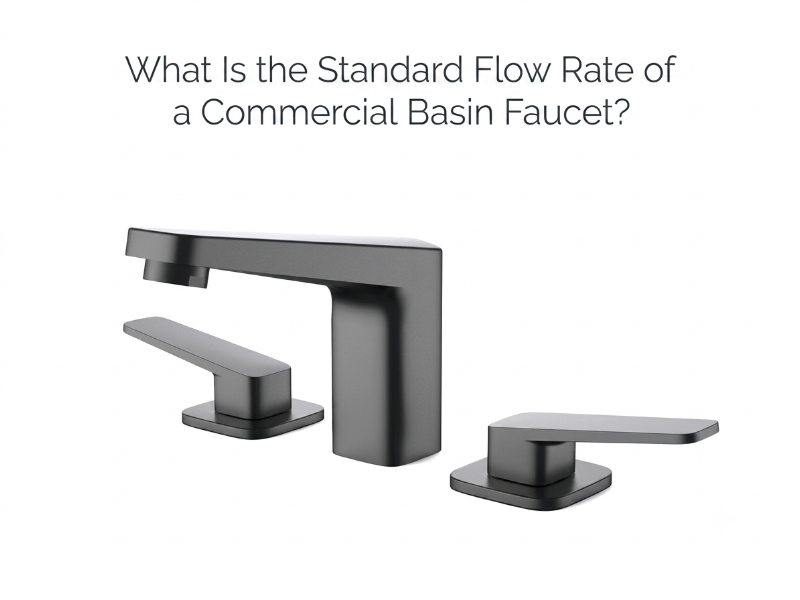
When you choose a grifo del lavabo for a commercial project, flow rate is not just a technical detail. It affects water savings, user experience, compliance, and long-term operating cost. For B2B buyers, the right faucet flow rate standard can make a measurable difference in project performance.
Today, many buyers look for a water saving faucet that balances efficiency and usability. That is why understanding the commercial basin faucet flow rate matters before you specify products. For project owners, contractors, and distributors, the right basin faucet can support both sustainability goals and customer satisfaction.
Faucet flow rate means the amount of water a faucet delivers per minute, usually measured in gallons per minute, or GPM. A higher flow rate uses more water, while a lower flow rate helps reduce bathroom faucet water consumption. In simple terms, it tells you how fast the faucet runs.
For commercial projects, flow rate is one of the key specifications you should check before purchase. It directly affects water bills, environmental performance, and whether the faucet fits the intended use. That is why the faucet flow rate standard is important in both design and procurement.
The standard flow rate for a commercial basin faucet is typically around 0.5 to 2.2 GPM, depending on the market, project type, and local regulations. In many public or commercial restroom applications, low-flow designs around 0.5 GPM are common, while some general-use basin faucets may still fall closer to 1.2 to 2.2 GPM.
For many commercial buyers, the most practical choice is a low flow basin faucet that reduces water use without making handwashing inconvenient. If your project prioritizes sustainability, a flow rate near 0.5 to 1.5 GPM is often considered a strong commercial option. The best flow rate depends on your building type, traffic volume, and regional code requirements.
Low flow basin faucets are becoming the standard because commercial projects need to cut water use without losing functionality. A water saving faucet helps reduce utility costs and supports green building goals, which matters more now than ever. For many operators, the savings add up across dozens or hundreds of fixtures.
Another reason is that modern aerator and valve technology has improved user experience. Today’s eco friendly faucet designs can deliver a steady stream while using less water. That makes low flow options much easier to specify for offices, hotels, schools, hospitals, and retail spaces.
Several factors influence bathroom faucet water consumption, and you should review them before selecting a product. The most important ones are water pressure, faucet design, aerator quality, and user behavior. A faucet may look efficient on paper but perform differently once installed.
Here is a simple table to help you compare the main factors:
If you are specifying products for a commercial project, do not look at flow rate alone. You should also consider how often the faucet will be used and whether the space needs a sensor or manual basin faucet. That is the best way to manage real-world water consumption.
Start by matching the faucet to the project use case. For high-traffic public restrooms, a lower flow rate often makes more sense because it reduces waste across many daily uses. For premium hospitality or executive spaces, you may need a slightly higher flow rate to preserve comfort.
Next, confirm the local code, client sustainability target, and expected user behavior. A commercial basin faucet flow rate should not be chosen only by price. When you specify the right water saving faucet, you improve both project value and operational efficiency.
If your priority is long-term efficiency, a low flow basin faucet is usually the smarter choice. If your project needs stronger rinse performance, you may choose a moderate flow rate while still keeping usage under control. The goal is to find the best balance between performance and bathroom faucet water consumption.
One common mistake is choosing the lowest flow rate without considering user comfort. An eco friendly faucet still needs to work well in daily use, especially in commercial bathrooms with frequent visitors. If the stream feels weak, users may keep the faucet running longer, which reduces the benefit.
Another mistake is ignoring actual project conditions. Water pressure, sink size, and fixture type all affect performance. You should also avoid selecting a basin faucet only by appearance, because the flow rate standard is what determines real water savings.
For many commercial bathrooms, a flow rate around 0.5 to 1.5 GPM is a practical target. Public restrooms often use lower-flow options, while some spaces may need more comfort and rinse performance. The ideal choice depends on traffic, project type, and local requirements.
Not always. A lower flow rate reduces water use, but it must still deliver a satisfactory user experience. If the stream is too weak, people may run the faucet longer, which can offset the savings.
Residential faucets usually focus on comfort and everyday household use, while commercial faucets must handle higher traffic and stronger efficiency goals. Commercial models often prioritize durability, water control, and compliance with public restroom standards. That is why basin faucet selection is different for each setting.
Yes, sensor faucets often save more water because they reduce unnecessary running time. They turn water on only when needed, which helps lower bathroom faucet water consumption. For busy commercial restrooms, that can create meaningful savings.
A low flow basin faucet is usually a faucet designed to use less water than traditional models, often around 0.5 to 1.5 GPM. These faucets are common in water saving faucet specifications for commercial projects. They are designed to reduce waste while maintaining usable performance.
Offices, hotels, schools, hospitals, airports, and retail spaces all benefit from low flow basin faucets. These locations typically have frequent use, so even small savings per use can become significant over time. That makes an eco friendly faucet a smart specification choice.
If you are selecting a commercial basin faucet, flow rate should be one of your first decision points. The right faucet flow rate standard helps you control bathroom faucet water consumption while supporting comfort and compliance. For most commercial projects, a low flow basin faucet is the most efficient and practical option.
FAAO offers Basin Faucet solutions designed for commercial needs, helping you choose a water saving faucet that fits your project goals. Learn more at FAAO and explore products that support efficient, modern, eco friendly faucet specifications.
 Optimized by Seraphinite Accelerator
 Spanish
  English
  French
  Russian
  Portuguese