Bienvenido a FAAO Sanitary Ware Co., Ltd.
 Teléfono: +86 13868315922
  Correo electrónico: [email protected]
Teléfono: +86 13868315922 Correo electrónico: [email protected]  Teléfono: +86 13868315922 Correo electrónico: [email protected]
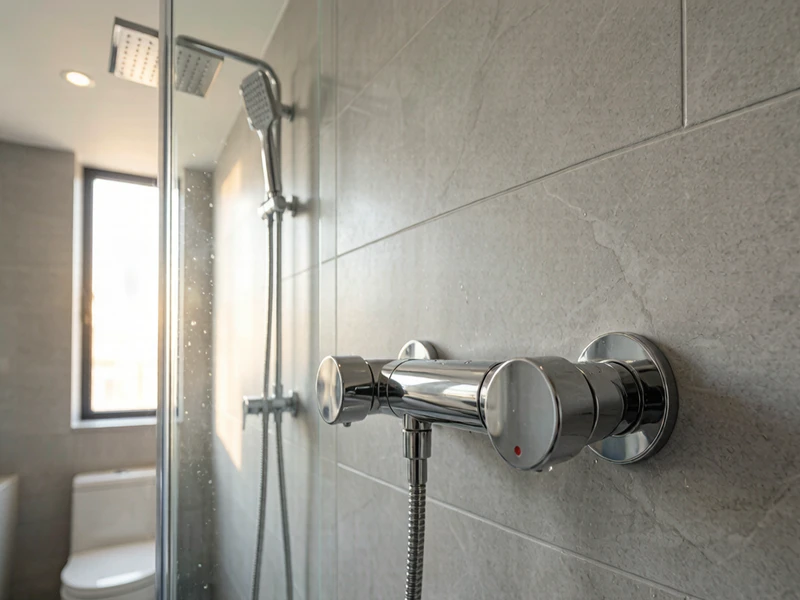
A thermostatic shower valve is the single component that separates a reliable hotel bathroom from a liability waiting to happen. While guests expect steady temperature and strong flow, engineers and procurement managers must ensure the hardware behind the wall meets safety codes, survives daily use, and reduces maintenance calls. This guide explains how thermostatic shower valves work, how they differ from pressure-balance alternatives, and what to specify when sourcing for hotels, serviced apartments, and commercial projects.
A thermostatic shower valve is a mixing device that blends hot and cold water to a pre-set outlet temperature and keeps it stable regardless of changes in supply pressure or temperature. Unlike a manual mixer, it reacts automatically. Inside the valve body, a thermostatic cartridge contains a temperature-sensitive element—usually a wax capsule or shape-memory alloy—that expands or contracts as the mixed water temperature changes. When the water runs too hot, the element restricts the hot inlet; when it runs too cool, it opens the hot inlet and reduces cold. The result is a consistent shower experience within ±1–2 °C of the set point.
Most models also include a mechanical temperature stop, often set to 38 °C, that prevents users from turning the dial into scalding territory. In the event of cold-water failure, a compliant valve shuts the hot flow down almost immediately, usually within one to two seconds.
The performance of the valve depends on three internal parts:
When a guest turns the dial to 38 °C, the element settles at its calibrated length. If a toilet flushes elsewhere on the same riser and cold pressure drops, the mixed water starts to warm. The element senses the rise, expands within milliseconds, and slides the shuttle to reduce hot flow. By the time the guest notices, the temperature has already corrected itself. This self-acting response is why thermostatic valves outperform pressure-balance units in multi-room buildings.

Need a Thermostatic Solution for Your Project?
Browse FAAO’s thermostatic shower column with brass body, ceramic cartridge and temperature-limit handle.
Pressure-balance valves are cheaper and mechanically simpler. They use a piston or diaphragm to keep hot and cold pressures in ratio. The problem is that they do not measure actual temperature. If the hot-water storage cycles upward during low-demand periods, the guest feels it. If the cold supply fails entirely, a pressure-balance valve cannot shut off the hot water on its own.
A thermostatic valve solves both issues. It measures temperature directly, compensates for pressure and temperature changes, and includes a fail-safe shut-off. For hotels, the additional unit cost is quickly recovered through fewer guest complaints, reduced liability exposure, and longer cartridge life in hard-water areas.
Scalding incidents are one of the most common hotel liability claims. A thermostatic valve with a 38 °C safety stop and cold-fail shut-off reduces that risk. In many jurisdictions, thermostatic mixing valves are required in healthcare, aged care, and early-childhood facilities; high-end hotels increasingly specify them voluntarily to protect vulnerable guests.
Hotels share hot-water risers across dozens or hundreds of rooms. At peak morning hours, when many rooms shower simultaneously, supply pressure and temperature fluctuate. A hotel bathroom shower faucet fitted with a thermostatic cartridge maintains the set temperature independently in each room, protecting the guest experience on every floor.
Cartridge replacement is faster than swapping an entire valve body. Most thermostatic cartridges are accessible from the front trim, so maintenance can be completed in minutes without damaging tilework. Over a five-year ownership cycle, the reduced labour and downtime offset the higher purchase price.
Once the maximum temperature is set and locked during commissioning, housekeeping and guests cannot accidentally override it. This makes compliance audits and insurance inspections more straightforward.
Sourcing Shower Faucets for a Commercial Project?
Explore FAAO’s full range of shower faucets, concealed sets and shower columns for hotels and developments.
When writing a specification or requesting a quote, include these points:

Get a Project Quote from FAAO
Tell us your standards, quantities and finishes. Our team will return a specification-ready quote within 24 hours.
A thermostatic valve measures mixed-water temperature and adjusts hot and cold flow to maintain a set temperature. A pressure-balance valve only balances the pressure ratio between hot and cold supplies and does not prevent temperature spikes.
Not always, but they are increasingly standard in mid-range and luxury hotels, and they are mandatory in many jurisdictions for healthcare, aged-care, and childcare facilities.
Most manufacturers preset the safety stop at 38 °C. In healthcare settings, local codes may require a lower maximum, often 41 °C for showers under UK TMV3 guidance.
Commercial cartridges are typically tested to 500,000 cycles, which translates to many years in a hotel environment. Hard water and poor filtration can shorten life.
Yes. A thermostatic valve maintains temperature at the mixed outlet; a separate diverter then routes water to the rainfall head, hand shower, or body jets.
Specifying the right shower valve is not only a design decision; it is a safety, operations, and brand-reputation decision. Thermostatic shower valves give hotel developers and procurement managers a predictable, compliant solution that protects guests and reduces long-term maintenance. If you are sourcing for a hotel, serviced apartment, or commercial project, start with the standards, confirm the cartridge and body quality, and choose a manufacturer with documented testing. FAAO supplies thermostatic shower columns, concealed shower sets, and commercial shower faucets built for project specification.
 Optimized by Seraphinite Accelerator
 Spanish
  English
  French
  Russian
  Portuguese