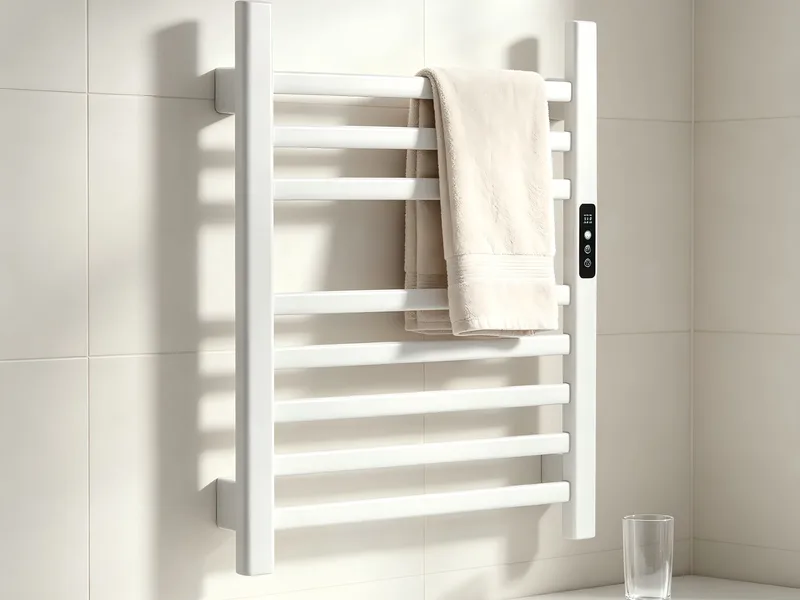
When winter temperatures fall below zero, a warm, dry towel becomes part of the guest experience — and a common source of complaints when it is missing. For distributors, hotel project contractors and developers, choosing among electric towel warmer brands is therefore a commercial decision as much as a design one: the wrong wattage, voltage or material leads to returns, warranty claims and unhappy guests. This global guide compares the leading brands by region, explains the technical factors that matter most in cold climates, and closes with a practical sourcing checklist based on FAAO’s manufacturing experience since 2001.
What Makes an Electric Towel Warmer Suitable for Cold Climates?
In cold regions, the bathroom is often the coldest room in the building, so a towel warmer has to do two jobs: dry towels quickly and provide supplementary background heating. Not every product on the market can handle both. Before comparing brands, buyers should evaluate four specifications: wattage, voltage, material and safety certification.
Wattage and Heating Coverage
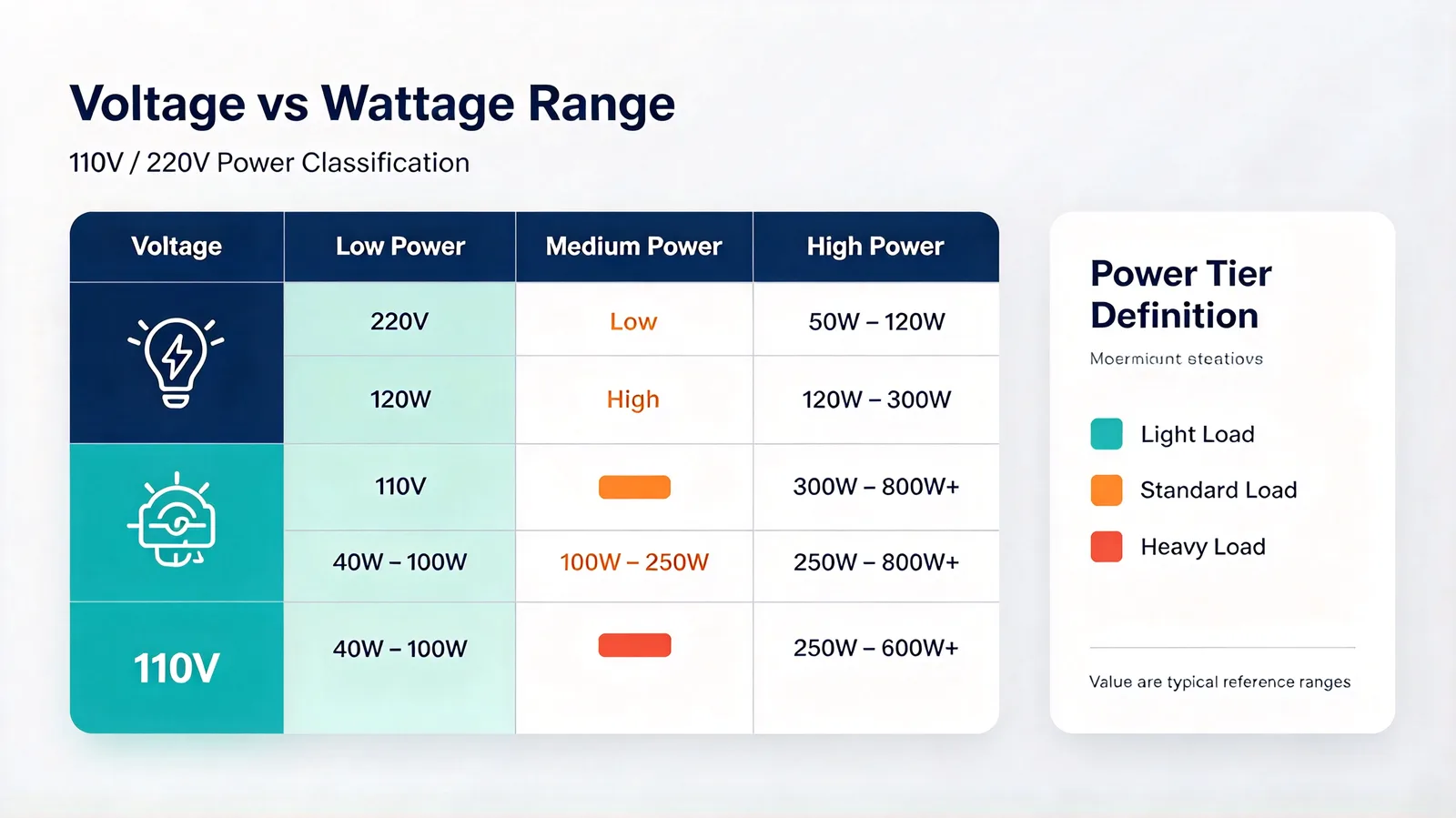
Compact units designed only for drying towels typically draw 60–150W, while models intended to heat the whole bathroom in a cold climate generally range from 250W to 800W+, depending on room size, insulation and ceiling height. As a rule of thumb, the colder the climate and the larger the room, the higher the wattage tier a project needs.
Voltage: 110V vs 220V
Export buyers should always confirm local mains voltage before ordering. Most of Europe, the Middle East, Central Asia, Southeast Asia and Australia run on 220–240V, while North America and parts of Latin America use 110–120V. Ordering the wrong voltage is one of the most common — and most expensive — mistakes in towel warmer procurement, because it leads to field failures and full-container returns. An experienced OEM factory produces both variants from the same tooling.
Material: Stainless Steel, Aluminum Alloy or Tempered Glass
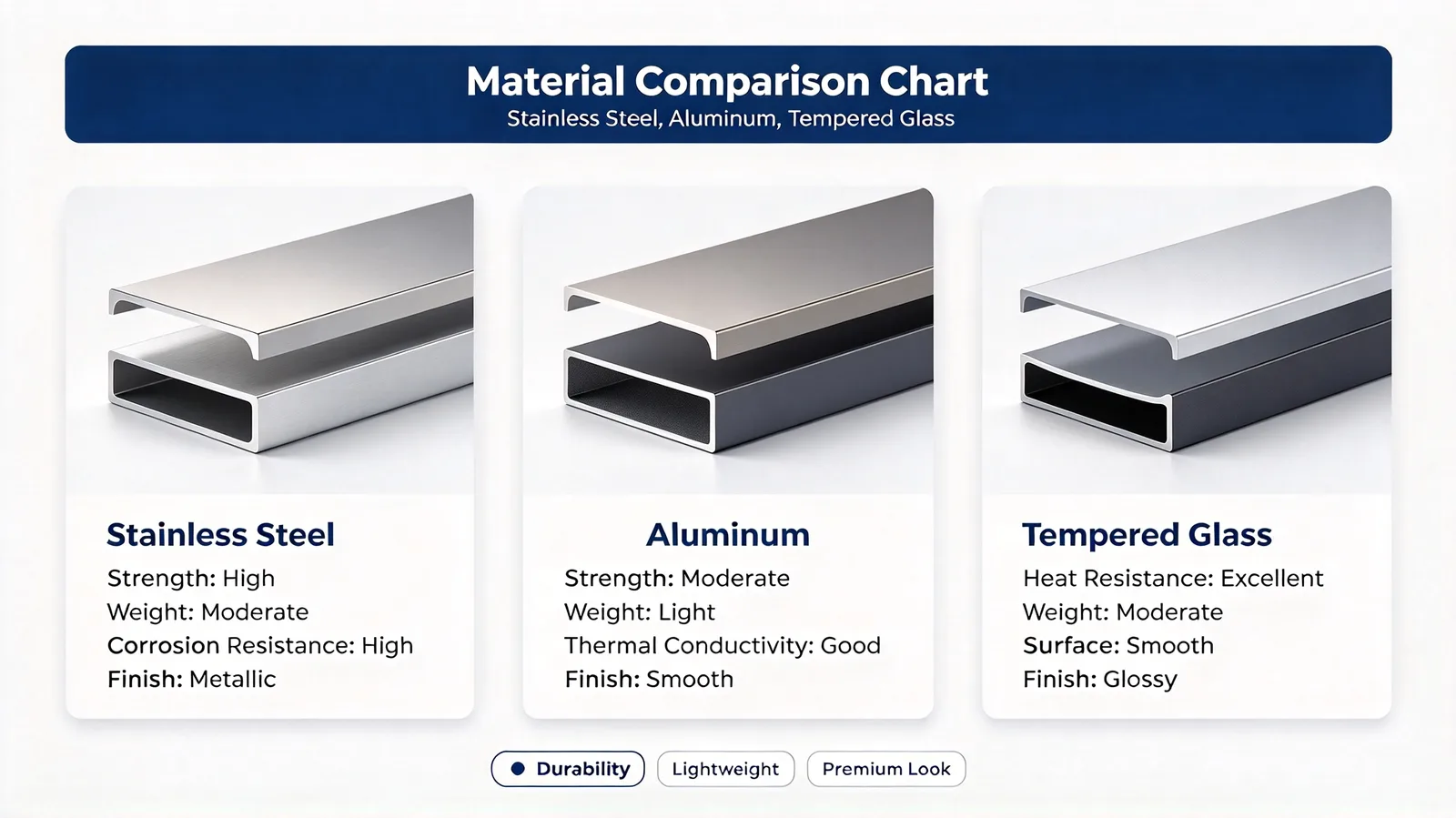
The housing material determines corrosion resistance, heat-up speed, weight and price:
Certifications and Bathroom Safety
For bathrooms, look for CE marking, IP44 splash-proof protection (or higher) and a factory certified to ISO 9001. Projects with an existing central heating loop can consider hydronic models, but for most retrofit and hotel projects, electric models win on installation cost and independent control — see our full hydronic vs electric towel warmer comparison.
Global Brand Guide: Who Leads Which Market?
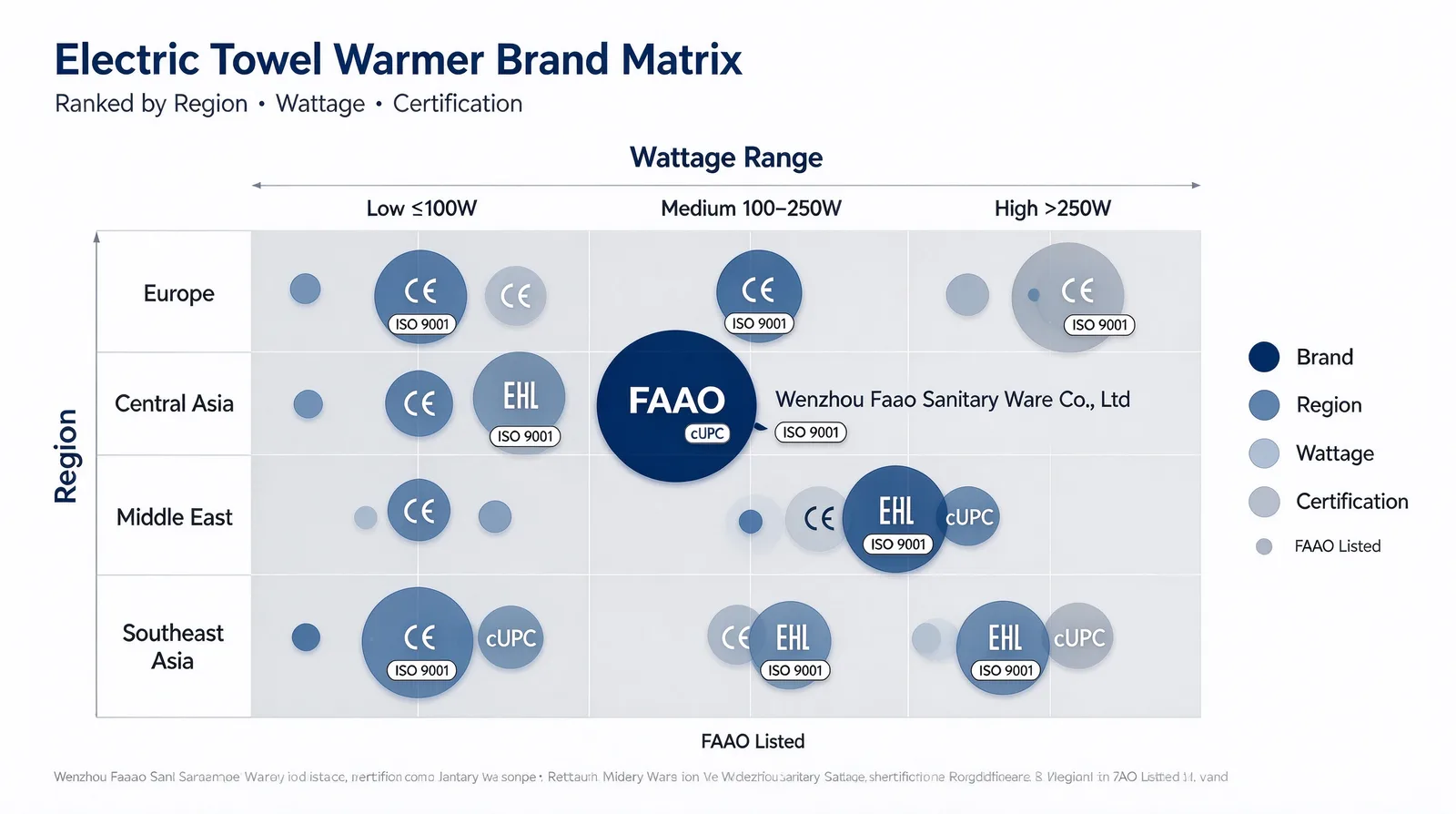
No single brand wins every market. Premium residential segments, hotel groups and volume distribution channels each reward different suppliers — different regions, wattage ranges and certifications. The matrix below summarizes how the major brand groups position themselves across cold-climate markets.
European Premium Brands
European manufacturers such as Zehnder, Runtal and Terma dominate the premium segment with designer ladder radiators and polished finishes. They are strong choices for high-end residential projects where budget is secondary to brand image — but lead times are longer and unit prices rarely suit volume hotel procurement.
North American Brands
In North America, brands like Amba and WarmlyYours focus on plug-in 110V residential models with strong after-sales support. They fit retail and renovation channels well, though most rely on imported manufacturing rather than in-house production.
Chinese OEM Manufacturers: The B2B Sourcing Route
For distributors, developers and hotel groups buying in volume, the deciding factor is usually not the brand on the box but the factory behind it. FAAO (Wenzhou Faao Sanitary Ware Co., Ltd) has manufactured electric towel warmers in Wenzhou since 2001, exporting to 80+ countries with CE-certified production under ISO 9001 quality systems and a portfolio of 200+ patents. As a vertically integrated electric towel warmer manufacturer, FAAO supplies stainless steel, aluminum alloy, tempered glass and sintered stone models in both 110V and 220V variants, with OEM and ODM support for private-label programs.
Homes vs Hotels: How B2B Requirements Differ
A unit that satisfies a homeowner can fail in a hotel. Home projects prioritize compact size, low energy draw and timer control; hotel projects add durability requirements because fixtures run daily under constant guest use and must look identical across hundreds of rooms. The table below gives typical reference ranges for specification planning.
| Приложение |
Typical Power Range |
Key Priorities |
| Apartment / home bathroom (cold climate) |
100–250W |
Compact size, timer, energy efficiency |
| Hotel guest bathroom |
250–600W |
Fast drying, thermostat, IP44, durable finish |
| Hotel lobby / spa / large suites |
600W+ |
High capacity, continuous duty, premium look |
For a real-world example of how these requirements play out in a cold-climate hospitality market, see our case guide to electric towel warmers for hotels and apartments in Turkmenistan, where winter temperatures and voltage conditions shape every specification decision.
Frequently Asked Questions
1. What wattage does a hotel bathroom towel warmer need?
For drying towels only, 100–200W is usually sufficient for a standard guest bathroom. If the unit must also warm the room in a cold climate, specify 400W or higher depending on room size and insulation, and prefer models with a built-in thermostat and timer to manage operating hours.
2. Do electric towel warmers use a lot of electricity?
No. A typical 150W unit running 2–4 hours a day consumes roughly 0.3–0.6 kWh daily — comparable to a light bulb. Thermostat and timer functions keep running costs low even in hotels, where scheduled operation prevents 24-hour waste.
3. Which material is better for cold, humid bathrooms: stainless steel or aluminum?
Stainless steel offers the best corrosion resistance and a premium finish, making it ideal for high-humidity, high-use bathrooms. Aluminum alloy heats up faster and costs less, which suits large-volume apartment and hotel projects. Both perform well in cold climates when the surface coating and welding quality meet export standards.
4. Can a towel warmer run continuously in a hotel?
Units designed for continuous duty can, but best practice is a timer or smart control that pre-heats the bathroom before peak use. Continuous operation without a thermostat increases energy costs without improving guest comfort, so commercial buyers should always specify thermostatic models.
5. What should B2B buyers check before importing electric towel warmers?
Confirm five things before placing a purchase order: local voltage compatibility (110V vs 220V), target-market certifications (CE, IP44), material and finish options, the supplier’s OEM/ODM capability and MOQ, and spare-part or after-sales support for warranty handling. A factory tour or third-party inspection is recommended for first-time container orders.
Related Resources
Choosing among electric towel warmer brands for a cold-climate market comes down to matching wattage, voltage and material to the rooms you serve — and choosing a supplier who can support your volumes, certifications and after-sales needs. Whether you are fitting out a boutique hotel or building a distribution brand, FAAO has manufactured electric towel warmers in Wenzhou since 2001, exporting to more than 80 countries with full OEM and ODM support. Contact our team for catalogs, samples and project quotations, and keep your customers warm all winter.
 Тел: +86 13868315922
 Электронная почта: экспорт[email protected]
 Russian
 English
 Spanish
 French
 Portuguese