Добро пожаловать в компанию FAAO Sanitary Ware Co., Ltd.
 Тел: +86 13868315922
  Электронная почта: экспорт[email protected]
Тел: +86 13868315922 Электронная почта: экспорт[email protected]  Тел: +86 13868315922 Электронная почта: экспорт[email protected]
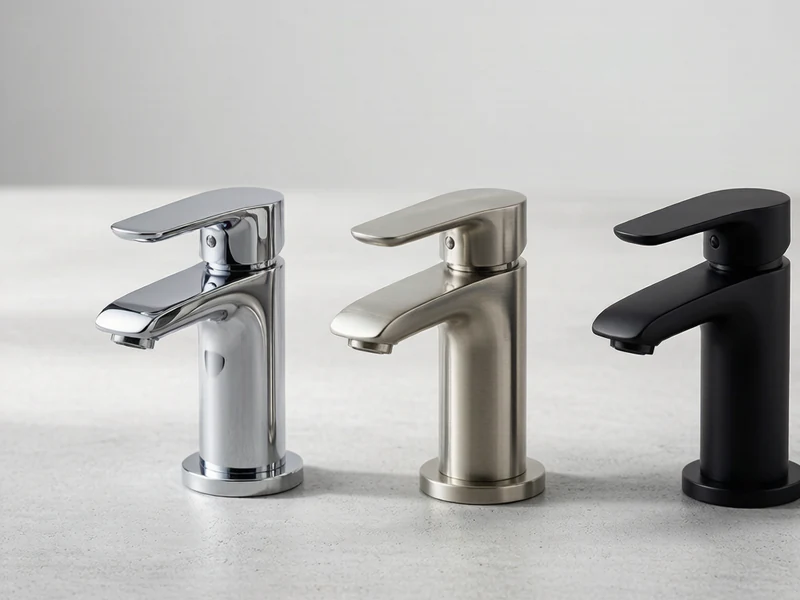
Specifying bathtub faucet finishes for a hotel build, residential development or wholesale program means balancing design language, durability and production lead time at the same time. Chrome, brushed nickel and matte black are the three finishes B2B buyers ask about most, yet each reaches the loading dock on a different clock. This guide breaks down how each finish is produced, what the realistic OEM lead time looks like, and how to plan a finish mix that keeps your container on schedule.
The brass body, the cartridge and the assembly work follow almost the same path regardless of finish. What changes the clock is the surface treatment that sits between polishing and packing. Chrome plating is the legacy standard and runs on the shortest cycle. Brushed nickel and matte black require extra masking, brushing or coating steps, and depending on the technology, a separate finishing line. When a buyer asks for a 50/50 chrome/matte black split on one PO, the factory often has to sequence the two finishes in different weeks rather than mix them on the same rack.
For B2B buyers, the practical implication is that the finish choice is a production-planning decision, not just a styling decision. Locking the finish code and the model number together, early in the spec stage, is the single biggest lever for protecting the lead time. The figures below are drawn from in-house brass смеситель для ванны production for global brand and project clients, with a dedicated electroplating and PVD line for non-chrome finishes.
Chrome is the default finish on roughly seven out of ten brass faucets shipped from Chinese sanitary ware factories. It is produced by electrodepositing a bright nickel underlayer followed by a thin microporous chromium layer onto a polished brass body. The brass is already polished before plating, so the visual outcome depends heavily on the polishing grade upstream.
For B2B projects, chrome is the safest lead-time option. Most factories keep a continuous plating bath running, which means new orders can be slotted into the next available rack without retooling. Lead times on standard chrome chrome bathtub faucet SKUs typically run 30 to 40 days after deposit for a 200-piece trial order, scaling to 45 to 55 days for a full 40HQ container once raw material is confirmed. The table below shows where the time actually goes.
| Production stage | Typical days | Notes for B2B buyers |
|---|---|---|
| Brass casting and CNC machining | 10–14 | Standard brass bodies already in stock shorten this window to 5–7 days. |
| Hand and automatic polishing | 5–7 | Higher-grade mirror polish adds 1–2 days. |
| Nickel + chrome electroplating | 3–5 | Continuous line, parallel batches possible. |
| Cartridge, aerator and hose assembly | 4–6 | Kerox or Sedal cartridges are common OEM choices. |
| Pressure test, packaging, inspection | 3–5 | Air and water testing before export carton. |
Buyers planning chrome orders should still build a one-week buffer into the schedule. Plating line interruptions, water-treatment downtime and a backlog of finishing racks can quietly add three to five days during the factory’s high season.
Brushed nickel, sometimes called satin nickel or brushed nickel PVD, gives the faucet a soft, warm tone with fine directional grain that hides water spots better than chrome. The finish is produced by brushing the polished brass body with nylon or ceramic abrasive belts to create consistent satin lines, then plating a thicker nickel layer, often without the chrome topcoat that defines standard chrome.
The additional brushing step and the longer plating bath push the lead time roughly 5 to 10 days beyond a comparable chrome order. For a standard 200-piece trial of a wall mounted bathtub faucet in brushed nickel, expect 38 to 50 days end to end, and 55 to 65 days for a full container depending on plating bath availability. Two production risks deserve early attention:
B2B sourcing tip
If you ship to both North America and Europe, request dual sample approval: one from the EU plating line and one from the AU/NZ line. The same finish code can render slightly different under different water-treatment chemistry.
Matte black on brass faucet bodies is not a single technology. There are three common paths, and they behave very differently on lead time, durability and corrosion resistance.
Powder coating over a nickel-plated body is the most common path for residential luxury bath taps and gives a soft, fingerprint-friendly matte surface. Lead time is similar to chrome, 35 to 45 days for a trial order, because powder coating is a batch process with relatively short cure cycles.
PVD titanium coating over a polished nickel underlayer produces a harder, more abrasion-resistant matte black surface that holds up better in commercial and hospitality projects. PVD requires a vacuum chamber cycle that runs in fixed batches of around 6 to 8 hours, so a 200-piece PVD order is typically 45 to 60 days end to end, and a full container 60 to 75 days. PVD also commands a higher unit cost, usually 15 to 25 percent above a comparable powder-coated black.
Wet-paint black is the cheapest option and the slowest to age. It is rarely used by reputable B2B suppliers for bathroom faucets because humid service accelerates chipping, but some low-cost catalogs still offer it. Avoid wet-paint black for any project with a warranty expectation.
| Matte black technology | Lead time (trial 200 pcs) | Долговечность | Best fit |
|---|---|---|---|
| Powder coating over nickel | 35–45 days | Good for residential use | Mid-market residential and apartments |
| PVD titanium over nickel | 45–60 days | Excellent, hotel-grade | Hotels, resorts, premium developments |
| Wet paint (rare for B2B) | 25–35 days | Poor, chips in service | Display only, not recommended for export |
If the spec says matte black without naming the technology, lock that detail before sampling. Powder coating and PVD look almost identical on a fresh sample but diverge quickly under two years of hotel-grade cleaning cycles.
The finish decision touches more than the plating line. Three downstream items are worth flagging before you issue the PO.
Minimum order quantity. Chrome SKUs on standard brass bodies are usually available at MOQ 100 to 200 pieces, because the bodies are already cast. Brushed nickel and PVD black typically require MOQ 200 to 500 pieces per finish code, because the factory has to schedule a dedicated rack or a dedicated PVD batch. Below those thresholds, expect a price premium of 8 to 15 percent.
Packaging and color boxes. Most OEM programs print a different color box per finish. A three-finish order usually needs three artwork files and three sets of printed cartons. Build five to seven extra days into the schedule if you are commissioning a new color box rather than reusing an existing SKU’s artwork.
Certification and salt-spray testing. A brass body certified in chrome does not automatically cover the same SKU in matte black or brushed nickel. Most B2B programs (CUPC in North America, WaterMark in Australia, ACS in France) require a representative sample of each finish to pass a salt-spray test. If you are planning a multi-finish program for a regulated market, ask the supplier to file the test report under the specific finish code, not just the model number.

Brass faucet bodies hanging on plating racks moving through
The numbers below assume a brass wall-mount wall mount tub filler with a standard cartridge and OEM color box. Use them as a planning baseline, then ask the supplier for a project-specific schedule once the model code is locked.
| Заканчивать | Process path | Lead time after deposit | Relative cost index |
|---|---|---|---|
| Polished chrome | Ni + Cr electroplating | 45–55 days | Baseline (1.0×) |
| Brushed nickel | Brushing + Ni plating (no Cr) | 55–65 days | 1.05–1.10× |
| Matte black (powder coat) | Ni + powder coat | 50–60 days | 1.05–1.08× |
| Matte black (PVD) | Ni + PVD titanium | 60–75 days | 1.15–1.25× |
| Mixed finish (chrome + matte black on same PO) | Sequenced plating or PVD + chrome | 65–80 days | 1.10–1.18× |
Mixed-finish orders take the longest because the factory cannot plate both finishes on the same rack. Brass bodies go through the chrome line first, then a sub-batch is diverted to the powder-coat or PVD line for the matte black units. Add 7 to 14 days of sequencing compared with a single-finish container.

Macro close-up texture comparison of polished chrome brushed
Plan a multi-finish bathtub faucet program?
FAAO runs an in-house electroplating and PVD line, with chrome, brushed nickel and matte black available across the FA-29100, FA-29500 and FA-29600 series bathtub faucets. Send your model list, finish split and target market for a project-specific lead-time plan.
Use the expandable sections below to preview the production path, MOQ, cost index and best-fit projects for each common bathtub faucet finish. Open only the finishes you are considering for the current order.
Production path: Brass casting → polishing → nickel plating → chrome plating → cartridge assembly → pressure test → color box packing.
MOQ: 100–200 pieces per SKU. Standard bodies in stock support fast sampling.
Best fit: Hotel new builds, residential developments, multi-unit projects where unit cost and speed dominate.
Watch out for: Visible water spots in hard-water regions; require a quick wipe-down in the user manual.
Production path: Brass casting → brushing with ceramic belts → thicker nickel plating (no chrome topcoat) → cartridge assembly → pressure test → color box packing.
MOQ: 200–500 pieces per finish code.
Best fit: Warm-tone interior schemes, transitional residential projects, hospitality renovations where chrome reads as too cold.
Watch out for: Tone drift between production batches; lock a hand-signed reference sample.
Production path: Brass casting → polishing → nickel plating → powder coating → curing oven → cartridge assembly → pressure test → color box packing.
MOQ: 200–500 pieces per finish code.
Best fit: Modern residential apartments, mid-market hospitality, design-led retail.
Watch out for: Edge chipping if the body has sharp cast corners; specify radius and deburr before plating.
Production path: Brass casting → polishing → nickel plating → PVD vacuum chamber (6–8 hours per batch) → cartridge assembly → pressure test → color box packing.
MOQ: 200–500 pieces per finish code; chamber batches favor container-size orders.
Best fit: Five-star hotels, branded residences, premium commercial projects with warranty exposure.
Watch out for: Chamber availability; book PVD slots at least 30 days before assembly.
Production path: Brass casting → split batch → chrome plating for the chrome units → nickel plating + powder coat or PVD for the black units → recombined assembly line → pressure test → two color-box variants.
MOQ: 200 pieces per finish code, with at least 50 pieces in the slower finish (usually PVD black).
Best fit: Hotels that specify chrome for public areas and matte black for guest bathrooms.
Watch out for: Dual artwork files and dual certification; build an extra 7–14 days for sequencing and color-box printing.
Polished chrome on a standard brass body. Continuous plating lines mean new orders can usually be slotted into the next available rack, with trial orders shipping in 30 to 40 days and full containers in 45 to 55 days after deposit.
PVD titanium over a nickel underlayer. It resists abrasion and chemical cleaning far better than powder coating, and is the standard choice for hotel-grade bathtub faucets with a five-year or longer warranty. Expect 60 to 75 days lead time and a 15 to 25 percent cost premium over chrome.
No. Most B2B programs require a representative sample of each finish to pass a separate salt-spray test. The test report should list the finish code as well as the model number. Ask for the report before paying the deposit on a multi-finish program.
Yes, but expect the lead time to extend by 7 to 14 days compared with a single-finish order. The two finishes cannot be plated on the same rack, so the factory sequences them through separate lines. Two color-box artworks and two sets of user manuals are also typical.
200 to 500 pieces per finish code, depending on whether the finish is on the supplier’s continuous line. For PVD matte black, expect the higher end of that range because the vacuum chamber runs in fixed batch sizes.
Lock a hand-signed reference sample with the factory and require a new sample approval for every production batch. Brushed nickel tone can drift from warm yellow to cool grey depending on plating bath age and chemistry, so a documented reference is the simplest protection.
Polished chrome. Replacement bodies are usually kept in stock and can ship within a week. Matte black and brushed nickel replacement units are slower because they have to be routed through the dedicated plating or PVD line.
Need a finish-by-finish quotation with your model list?
FAAO ships brass bathtub faucets in chrome, brushed nickel and PVD matte black across the FA-29100, FA-29500 and FA-29600 series. Send your SKU list, finish split and target market for a fixed lead-time quotation.
Chrome, brushed nickel and matte black are not interchangeable finish codes. They run on different production paths, different plating lines and different schedules, and they each carry a different cost index. Plan the finish mix at the same time as the model list, lock the technology behind any matte black code, and build a one-to-two-week buffer around the PVD or mixed-finish scenarios. With the finish decided early, a multi-finish bathtub faucet program can move through sampling, certification and shipment on a predictable clock.
About FAAO
Wenzhou FAAO Sanitary Ware Co., Ltd. is a sanitary ware manufacturer established in 2001, producing brass faucets, bathroom accessories and electric towel warmers for global brand, retail and project clients. With in-house R&D, brass foundry, machining, polishing, electroplating and assembly, FAAO supports OEM/ODM programs from sample to serial production and ships to North America, Europe, Australia and the Middle East.
Disclaimer: Lead times and MOQ figures in this article are planning baselines for brass bathtub faucet programs at the OEM stage. Final numbers depend on the specific model code, finish technology, certification scope and the factory’s production calendar at the time of order. Always confirm a project-specific schedule with the supplier before issuing a purchase order.
 Оптимизировано Серафинит - Акселератор
 Russian
  English
  Spanish
  French
  Portuguese