


In daily life, using a damp and cold towel instead of a heated one after a hot shower has become an inevitable minor inconvenience. However, with an electric towel rack, this problem is easily solved. This device is not only a sophisticated bathroom item but also keeps the towel warmer, soft, and sterile, adding a touch of modernity to the home environment. These products on the market mainly use four materials: stainless steel, aluminum, tempered glass, and fire-resistant stone. Each material has its unique characteristics, which can meet different needs, allowing you to easily select the ideal electric towel warmers for your bathroom.
These four materials each have their own advantages, including durability, heat insulation performance, appearance, and cost, etc. Whether it is the renovation of a high-end hotel bathroom, residential decoration, or equipment installation for rental properties, the materials used in the electric towel warmer will directly affect its performance, service life, and whether it can meet your usage requirements. In this guide, we will analyze the advantages and disadvantages of each material design and its applicable scenarios, compare its main features, and highlight the significant advantages of the FAAO electric towel warmers among many similar products. After reading this guide, you will obtain all the information needed to make a wise decision.
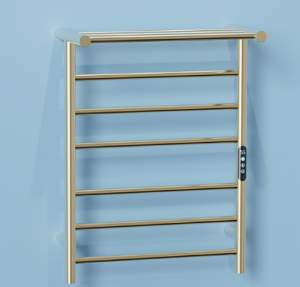
Electric Towel Warmers, or towel rack warmers electric, are bathroom appliances designed to heat and dry towels, bathrobes, and even small garments. They operate using electric heating elements—typically carbon fiber or heating wires—that distribute heat evenly across the fixture. Unlike traditional towel racks, towel warmers electric serve dual purposes: practical drying to prevent mildew and bacteria growth, and comfort by providing warm towels for a luxurious post-shower experience. This makes them a must-have among electric towel warmers for bathroom upgrades.
Modern models are usually equipped with smart functions such as timers, temperature control and remote control, allowing for the pre-setting of heating cycles and optimizing energy consumption. Most of these products are installed on the wall to save space, and their IPX4 level of waterproofing ensures safety even in damp bathrooms. The product styles are diverse, ranging from simple modern designs to decorative ones, providing flexible options for various bathrooms.
Besides drying towels, the electric heating mats can also effectively eliminate the humidity in small bathrooms, reduce moisture accumulation, and improve air quality. For families with children or pets, these devices are even more important upgrades: warm towels and dry clothes bring a comfortable experience, while the drying function reduces the risk of allergies caused by mold.
Stainless steel is a common material used in the manufacture of electric towel warmers, and due to its excellent durability, it is particularly suitable for commercial areas and high-frequency usage locations. High-quality models use 304 or 316L stainless steel: 304 is food-grade stainless steel, with extremely high corrosion resistance; while 316L belongs to medical-grade stainless steel, with better antioxidant and moisture-proof properties, especially suitable for humid environments such as bathrooms. Other materials tend to age and deteriorate easily in such environments.
In addition, if stainless steel has excellent heat conductivity, it can effectively keep towels warm for a long time. Cleaning is also very simple: most stains and scale can be easily removed with a damp cloth, but regular polishing is necessary to maintain the shine. Its modern and simple design style can be adapted to different bathroom styles, from contemporary to industrial. Many styles also come with mirrors or dark surfaces as decorative elements, adding a touch of elegance to the overall atmosphere.
One of the major drawbacks of stainless steel is that it is prone to leaving fingerprints and stains. If not cleaned frequently, it may appear messy. Additionally, stainless steel is a relatively heavy material, so larger models may require reinforced wall-mounted brackets to ensure stability. Compared to aluminum, stainless steel has a lower thermal conductivity, which means longer heating times but better insulation once heated.
Another factor to consider is the price: stainless steel electric ovens are usually more expensive than aluminum models, due to higher material costs and more complex manufacturing processes. Low-quality stainless steel can rust or change color over time, so choosing a reliable brand is crucial to avoid disappointment.
This stainless steel electric tissue holder is highly suitable for commercial settings such as hotels, spas, and universities, as these environments have extremely high requirements for the durability and resistance of the product. At the same time, it is also an ideal choice for coastal residences because the saline environment may damage other materials. In modern or industrial-style bathrooms, stainless steel stands out for its outstanding performance; for families seeking long-lasting durability and easy maintenance, stainless steel is the best choice. For medical institutions or nursing homes with allergy patients, the 316L stainless steel model is more suitable as it can provide better hygiene conditions and stronger corrosion resistance.
Aluminum is a lightweight and economical material that is widely used in electric heating towel warmer, especially suitable for residential and budget projects. It has excellent thermal conductivity, heats up quickly, and evenly distributes heat throughout the entire device. This means that your towels can be heated in just a few minutes. The feature of quick heating helps save energy and offers a more energy-saving advantage compared to materials with slower heating speeds.
Aluminum itself has excellent corrosion resistance. Most models are also treated on the surface, such as with powder coating or anodizing, to enhance durability and appearance. These surface treatments offer a variety of color options, ranging from black and white to metallic tones, allowing for easy integration with any bathroom decoration style.
The lightweight design simplifies the installation process, eliminating the need to be fixed to reinforced walls, reducing transportation costs. Therefore, aluminum products are usually more cost-effective. Many aluminum electric drying machines adopt modular design, with components that are easy to assemble, facilitating maintenance and replacement. Moreover, their touch does not generate excessive heat, providing a safer and more comfortable usage experience for families with children.
Although aluminum is lightweight, its strength is lower than that of stainless steel. If poor-quality aluminum products are used to carry heavy towels or bath towels, they are prone to bending or deformation. Although aluminum treated with surface treatment has relatively high durability, it may still develop scratches or fractures due to the use of strong chemical cleaners. Unlike stainless steel, aluminum has poor heat conductivity: once the power is cut off, it will cool down rapidly, which may be a drawback for those who want to keep towels warm for a long time. Moreover, aluminum is not very suitable for high-end or luxurious spaces as it is usually regarded as a “cheap” material. Although surface treatment can improve the appearance, it still cannot match the exquisite texture presented by stainless steel, tempered glass, or ceramic stone.
The aluminum towel warmer is highly suitable for family bathrooms, rental apartments, and budget-constrained renovation projects. Its lightweight design and compact size make it particularly outstanding in small bathrooms. Families with children will appreciate its safer and more comfortable surface, while tenants can enjoy the convenience of installation and the affordability. With its gentle lines and brightly colored surface treatment, the aluminum style is also an ideal choice for modern or minimalist bathroom designs. For example, the aluminum towel rack from the FAAO brand is widely popular in hotels and residences worldwide, achieving a perfect balance between performance and cost.
The tempered glass electric towel warmer is a perfect example of luxury and elegance. It is made of 10-millimeter thick laminated glass and is reinforced to enhance safety. It also features noise reduction and temperature control features. In case of breakage, the glass will shatter into round and smooth pieces instead of sharp fragments, making it particularly suitable for use in bathrooms. The glass surface is smooth and easy to clean, and there are no cracks that can accumulate dirt or mold.
The design of the tempered glass embodies modern minimalist aesthetics, adding a dynamic visual effect to any bathroom. The product offers various styles such as transparent, frosted, or colored, and can be installed horizontally or vertically according to the size of the space. Most models are equipped with infrared heating technology, which can gently and evenly heat the towels, maintaining their texture while reducing energy consumption. Additionally, the glass edges have a cool touch when in contact, effectively enhancing safety during use.
The electric towel warmer with tempered glass is one of the most expensive products on the market. This is because it requires the use of high-quality safety glass and has a complex manufacturing process. Moreover, this product is heavier than aluminum products, so it must be firmly fixed to the wall to prevent accidents. Although tempered glass has the function of resisting breakage, it is not scratch-resistant: rough cleaning tools or sharp objects may damage its surface, affecting its appearance.
Another drawback is poor heat insulation performance: the glass cools down quickly, resulting in the towel losing its warmth effect faster than the stainless steel model. Additionally, towel rack models made of tempered glass usually have limited load-bearing capacity and are more suitable for lightweight towels and bathrobes, but not for heavy and wet items such as wet blankets.
Tempered glass electric towel warmers are perfect for high-end residential bathrooms, boutique hotels, and spas, where aesthetics are a top priority . They work well in modern, minimalist, or contemporary spaces, adding a touch of sophistication. Small bathrooms benefit from their space-saving design, and homeowners who prioritize safety will appreciate the shatterproof glass. Tempered glass models are also a great choice for bathrooms with limited storage, as they double as a decorative fixture while drying towels.
Sintered stone is a premium, innovative material for electric towel warmers, made by pressing and sintering natural stone particles at high temperatures. It offers a unique combination of durability and style—resistant to scratches, stains, and heat, with a sleek, modern finish . Sintered stone is naturally waterproof and rust-resistant, making it ideal for humid bathroom environments .
One of the standout benefits of sintered stone is its even heat distribution. It heats up gradually, providing gentle, consistent warmth that dries towels without damaging fabric . The material has a luxurious, natural stone appearance, with options like black sintered stone that add a touch of elegance to any bathroom . Most sintered stone models feature integrated smart timers, allowing you to pre-program heating cycles and save energy . They’re also low-maintenance—just wipe with a damp cloth to keep them looking new.
Sintered stone is the heaviest material on this list, requiring reinforced wall mounting and professional installation. It’s also the most expensive, making it a niche choice for luxury projects only. The material is brittle—while resistant to scratches and stains, it can crack if struck with a heavy object. Additionally, sintered stone has slower heat conduction than aluminum alloy, so it takes longer to warm up towels .
Color and style options are more limited compared to other materials, with most models available in neutral tones like black, grey, or beige . This can make it harder to match bold or colorful bathroom decor.
Sintered stone electric towel warmers are designed for luxury residential bathrooms, high-end hotels, and boutique spas . They’re perfect for spaces where aesthetics and durability are equally important, and where budget is not a primary concern. Sintered stone works well in modern, minimalist, or natural-style bathrooms, complementing marble, granite, or other stone fixtures. Homeowners who want a unique, statement piece that stands out from traditional metal or glass models will appreciate the natural beauty of sintered stone .
Choosing the right option among these four material designs depends on your priorities—whether it’s cost, durability, aesthetics, or performance. The table below summarizes the key differences between stainless steel, aluminum alloy, tempered glass, and sintered stone electric towel warmers:
| Feature | Stainless Steel | Aluminum Alloy | Tempered Glass | Sintered Stone |
| Durability | High (rust-resistant, strong) | Medium (lightweight, prone to bending) | Medium (shatterproof, scratch-sensitive) | High (scratch/stain-resistant, brittle) |
| Heat Conduction | Medium (slow heat-up, good retention) | High (fast heat-up, poor retention) | Medium (infrared heat, quick cool-down) | Low (slow heat-up, even distribution) |
| Aesthetics | Modern, sleek (mirror/brushed finishes) | Versatile (colorful powder coating) | Luxurious, minimalist (clear/colored glass) | Natural, premium (stone-like finish) |
| Cost | Medium-High | Low-Medium | High | Premium |
| Weight | Heavy | Light | Medium-Heavy | Very Heavy |
| Best For | Commercial, coastal homes, modern spaces | Residential, rentals, budget projects | Luxury bathrooms, spas, boutique hotels | High-end residences, premium hotels |
FAAO has been a trusted name in sanitary ware for over a decade, specializing in high-quality electric towel warmers designed for both residential and commercial use. What sets FAAO apart is its commitment to balancing performance, durability, and affordability—offering a range of models to suit every need and budget.
FAAO’s aluminum alloy electric towel warmers are a customer favorite, featuring 12-bar designs with adjustable temperature controls and timers . Made from high-grade aluminum alloy with a durable powder-coated finish, they heat up quickly, distribute heat evenly, and resist corrosion—perfect for humid bathrooms. The lightweight design simplifies installation, and the 2-year warranty provides peace of mind . FAAO also offers custom solutions, allowing you to choose from a range of colors, sizes, and finishes to match your project’s needs .
For luxury projects, FAAO’s premium models incorporate stainless steel and tempered glass, combining durability with sleek design. All FAAO electric towel warmers meet international safety standards, including IPX4 waterproof ratings and EMC certifications, ensuring safe operation in damp environments . With a global customer base spanning 44 countries, FAAO has a proven track record of delivering reliable, high-performance products for hotels, spas, and homes .
Beyond product quality, FAAO offers exceptional after-sales service, including online technical support and timely delivery . Whether you’re outfitting a single bathroom or a large hotel chain, FAAO provides end-to-end solutions tailored to your needs.
Electric towel warmers are a valuable addition to any bathroom, combining practicality with comfort and style. The right material for you depends on your priorities: stainless steel for durability and corrosion resistance, aluminum alloy for affordability and quick heat-up, tempered glass for luxury and safety, or sintered stone for premium natural aesthetics.
When choosing, consider your space, budget, decor style, and maintenance needs. For most homeowners and renters, aluminum alloy models offer the best balance of cost and performance. For luxury projects, tempered glass or sintered stone will elevate your bathroom’s design. And for commercial or coastal spaces, stainless steel is the most reliable choice.
FAAO Electric Towel Warmers stand out for their quality, versatility, and safety, with options across all four material designs to suit every preference for electric towel warmers for bathroom. Whether you’re looking for sleek towel rack warmers electric for a modern home or durable models for commercial spaces, FAAO combines functionality and style. By investing in high-quality towel warmers electric, you’ll enjoy warm, dry towels year-round, reduce bacteria growth, and add a touch of style to your bathroom—without worrying about excessive energy use, as we clarified with the question “do towel warmers use a lot of electricity.” It’s an investment in comfort and convenience that will last for years.
Q1: How much energy do electric towel warmers use?
A:Energy consumption varies by model and material, but most Electric Towel Warmers use 120–700 watts—answering the common question, “do towel warmers use a lot of electricity?” The answer is typically no, especially when used efficiently. Towel rack warmers electric with fast heat-up times are more energy-efficient, as they reach optimal temperature quickly and can be turned off sooner. Sintered stone models may use slightly more energy due to slower heat conduction but still fall within a reasonable range. Using a timer to pre-program heating cycles for electric towel warmers for bathroom further reduces energy use, making them a cost-effective addition to any space.
Q2: Are electric towel warmers safe to use in damp bathrooms?
A:Yes, as long as they have an IPX4 waterproof rating, which is standard for most models . This rating means they’re resistant to splashing water from any direction. Always choose a model with safety certifications and follow the installation instructions carefully .
Q3: Can electric towel warmers dry more than just towels?
A:Absolutely. They’re great for drying bathrobes, small garments (like children’s clothes), and even swimwear . Just avoid overloading the fixture, as this can reduce heat distribution and damage lightweight materials like aluminum alloy .
Q4: How long do electric towel warmers last?
A:Lifespan depends on the material and quality. Stainless steel and sintered stone models can last 15–20 years with proper maintenance. Aluminum alloy models typically last 10–15 years, while tempered glass models have a lifespan of 8–12 years . FAAO models come with a 2-year warranty, ensuring reliability .
Q5: Do electric towel warmers require professional installation?
A:Most wall-mounted models require professional installation, especially for electrical connections . Lightweight aluminum alloy models may be easier to install, but it’s still recommended to hire a professional to ensure safety and proper mounting. Sintered stone and stainless steel models, being heavier, require reinforced wall mounting .
Q6: Can I control my electric towel warmer remotely?
A:Many modern models, including FAAO’s premium lines, offer remote control or smart features like app integration and timers . This allows you to pre-program heating cycles, adjust temperature, and turn the warmer on/off from your phone .
Q7: Are aluminum alloy electric towel warmers durable enough for commercial use?
A:FAAO’s high-grade aluminum alloy models are suitable for light commercial use, like small hotels or spas . However, for high-traffic commercial spaces, stainless steel is more durable and resistant to wear and tear .
Q8: How do I clean my electric towel warmer?
A:Cleaning depends on the material: stainless steel can be polished with a stainless steel cleaner to remove fingerprints; aluminum alloy should be wiped with a damp cloth; tempered glass and sintered stone can be cleaned with mild soap and water . Always turn off and unplug the warmer before cleaning.
Q9: Do electric towel warmers help heat the bathroom?
A:Yes, they can add a small amount of heat to the bathroom—typically raising the temperature by 3–5℃ . This is most noticeable in small bathrooms and can be a useful supplementary heat source in cold climates. Models with higher wattage are more effective for heating .
Q10: Are sintered stone electric towel warmers worth the cost?
A:They’re worth it if you prioritize premium aesthetics, durability, and even heat distribution . Sintered stone is ideal for luxury projects where budget is not a constraint and you want a unique, natural-looking fixture. For most homeowners, aluminum alloy or stainless steel offers better value .
Q11: Can electric towel warmers cause burns?
A:Most models are designed to stay at a safe temperature. Aluminum alloy and tempered glass models are less likely to feel overly hot, while stainless steel may have hotter surface areas. Always keep children away from the warmer when in use, and choose models with temperature controls .
Q12: Do FAAO electric towel warmers come in custom sizes?
A:Yes, FAAO offers custom solutions for commercial and residential projects, including custom sizes, colors, and finishes . Whether you need a compact model for a small bathroom or a large unit for a hotel, FAAO can tailor the design to your needs.
 Optimized by Seraphinite Accelerator
 Tel:
Tel:  E-mail:
  English
  Spanish
  French
  Russian
  Portuguese