

For importers, distributors, and hospitality project buyers, an electric towel warmer is only as reliable as its installation. Voltage mismatch, the wrong IP rating, and poor wall mounting cause most field failures and warranty claims — and nearly all of them are preventable at the specification stage. This guide covers the wall-mount essentials that matter in a B2B order: voltage selection for export markets, IP44 bathroom zoning, plug-in versus hardwired wiring, and anchoring on tile, concrete, and drywall. It reflects FAAO’s factory standards as a sanitary-ware manufacturer since 2001.
In retail, a failed installation costs one unhappy customer. In a hotel, apartment, or gym project, the same mistake repeats across dozens of rooms: brackets that loosen under wet towel weight, elements wired to the wrong voltage, or units tripping the RCD on every floor. Professional buyers therefore treat installation requirements as part of the product specification — confirmed in writing before the bulk order, not discovered at the job site. The checklist below is what FAAO’s engineering team reviews with distributors before every export order of towel warmers.
Sourcing Towel Warmers for Your Market?
Three parameters decide whether a heated towel rail installs cleanly in your target market. Confirm all three with your supplier before production starts.
Most export markets run on 220–240V at 50Hz (EU, UK, Australia, the Middle East, and Southeast Asia), while North America and parts of Latin America use 110–120V at 60Hz. Wattage typically ranges from about 100W for compact rails to 600W or more for large hotel ladders, and the right figure depends on rail size, room volume, and whether the unit doubles as a supplementary heater. FAAO configures elements, plugs, and frequency to the destination market as standard — one less thing to correct on site.
When quoting projects, keep two rules of thumb in mind: underpowered units dry towels slowly and generate guest complaints, while oversized units waste energy and complicate circuit planning.
Bathrooms are divided into electrical zones. A wall-mounted towel warmer installed within reach of a bath or shower (Zone 1, and Zone 2 by extension) must be rated at least IP44 — protected against water splashes from any direction. FAAO units are built to IP44 as standard, and we recommend a residual current device (RCD/GFCI) on the circuit regardless of zone, because hospitality projects in most regions now require it.
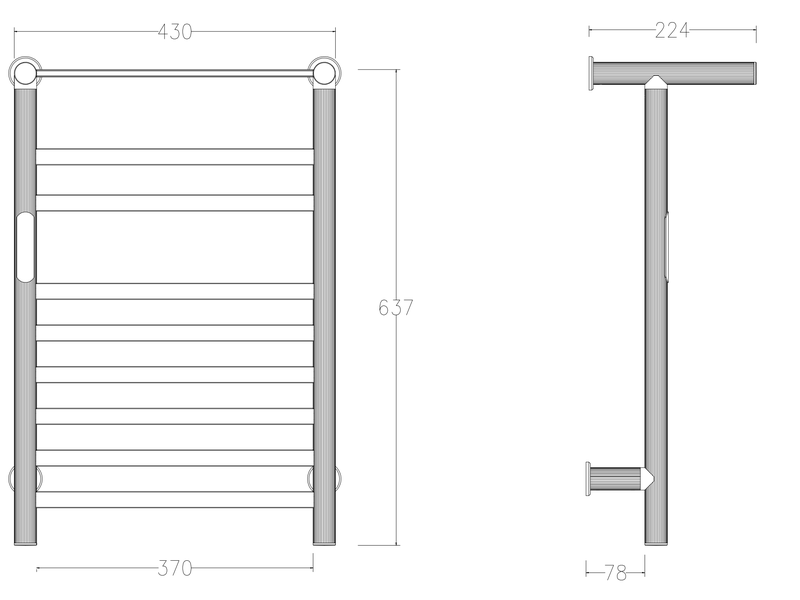
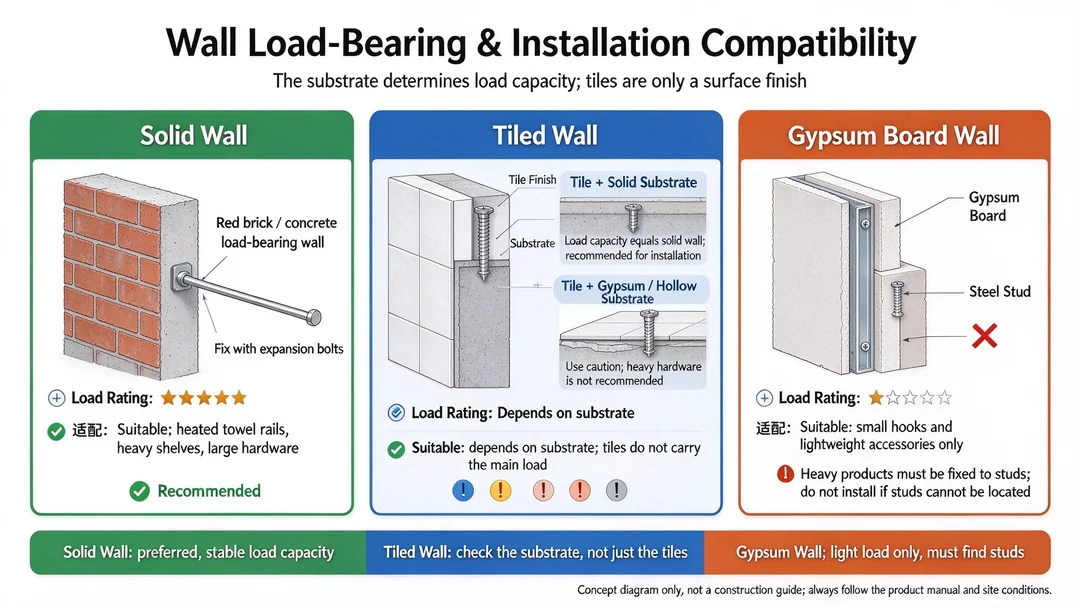
Anchoring depends on the substrate. Tile and concrete need a hammer drill with masonry bits and wall plugs; drywall requires fixing into studs or using heavy-duty toggle anchors. Weight matters, too: a mid-size unit plus soaked towels can exceed 10–15 kg, so the supplied bracket set must match the wall material. Our aluminium alloy electric towel warmers are a good example — the light frame reduces wall load in high-rise installations, and every FAAO unit ships with a mounting kit, drilling template, and spacer blocks sized for standard walls.
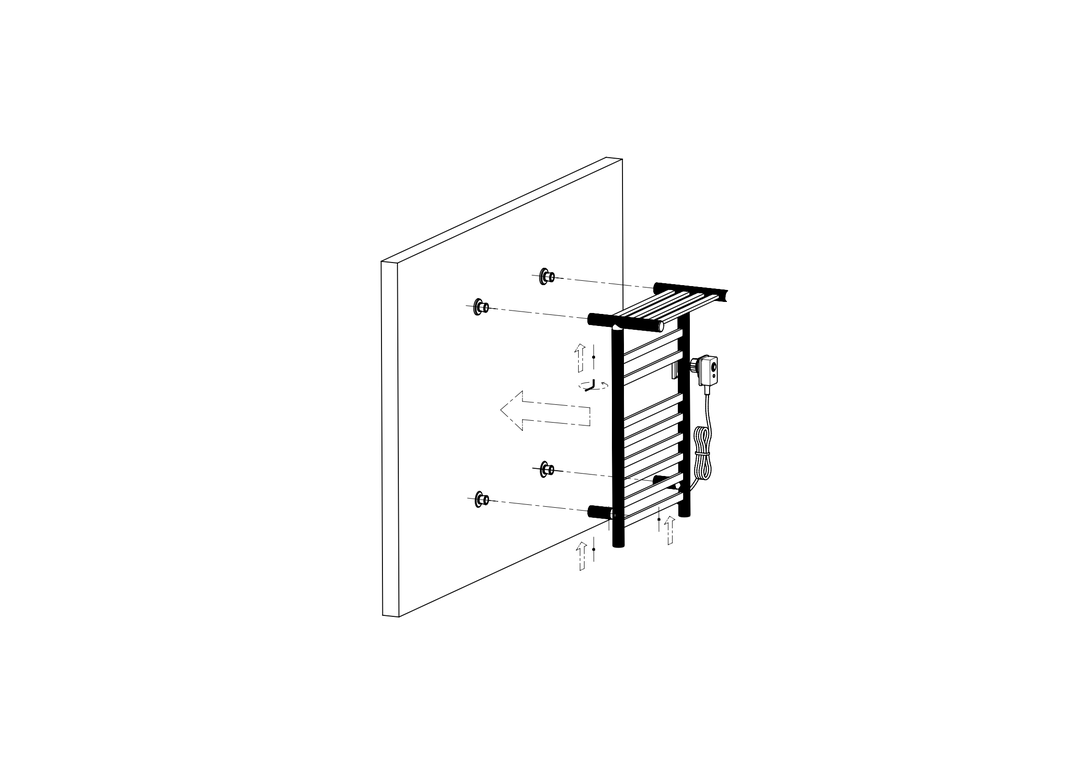
The sequence below follows the installation manual FAAO supplies with OEM orders; adapt it to local wiring regulations where they differ.
A drill with masonry and wood bits, spirit level, tape measure, screwdriver set, voltage tester, and the mounting kit from the carton. Isolate the circuit before starting and confirm it is dead with the tester.
Tape the drilling template to the wall and keep the bottom rail roughly 400–600 mm above finished floor level for comfortable towel access. Mark the fixing points, drill, insert wall plugs, then fix the brackets with the spacers included — spacers create the airflow clearance behind towels and protect the finished wall surface. Check the rail is level before final tightening.
Plug-in models suit retail channels and renovation projects; hardwired connection is the hotel standard because it hides the cable and pairs cleanly with timer or thermostat controls such as those on the electric heated towel rail with timer. All fixed wiring must pass through an IP-rated junction box outside Zone 1, and the circuit should carry RCD protection. Certification paperwork — CE, UKCA, or ETL for North America — should match the wiring style of the destination market.
Torque every fixing, confirm the rail is level, run a full heat-up cycle, and hand over the timer programming to the end user. On hotel floors, photograph each completed installation — the records speed up any after-sales conversation later.
Need a Model That Installs Fast at Scale?
Most warranty disputes we resolve trace back to a short list of avoidable errors:
For distributors, the fix is contractual as much as technical: require the supplier’s installation manual to ship inside every carton, in the market’s language, and brief installers on the checklist above.
Installation quality starts at the factory. FAAO has manufactured sanitary-ware in Wenzhou since 2001, runs a 20,000 m² plant exporting to 80+ countries, and holds CE, ACS, Watermark, and ISO 9001 certification with more than 200 patents. On OEM and ODM orders we configure voltage, frequency, plugs, and wiring style per destination market, supply multilingual installation manuals, mounting templates, and IP44 test reports, and can pre-assemble wiring harnesses so on-site connection becomes a two-connector job. Share your market and project type with our team, and we will return a full specification sheet with the shipment documents.
Order 220–240V at 50Hz for Europe, the UK, Australia, the Middle East, and most of Asia; 110–120V at 60Hz applies to North America and parts of Latin America. Confirm frequency as well as voltage, because timers and thermostats are frequency-sensitive. FAAO ships market-configured elements on every OEM order.
Yes. FAAO models can be supplied for fixed (hardwired) installation or with a market-standard plug. Hotels and apartment projects usually choose hardwired units with timer or thermostat control, while retail and renovation channels prefer plug-in for simpler installation. Specify the wiring style at order stage — it affects the harness and junction-box position.
A minimum of IP44 — protection against splashing water from any direction — for units installed in bathroom Zones 1 and 2. FAAO towel warmers are IP44 as standard, and we recommend RCD-protected circuits in all hospitality installations regardless of zone.
Use a hammer drill with a masonry bit, insert the supplied wall plugs, and fix the brackets through the drilling template so spacing stays accurate and the rail seats without force. Avoid hollow drywall unless you can fix into studs or use toggle anchors — a rail plus wet towels can exceed 15 kg.
Yes. Every FAAO shipment includes the mounting kit, drilling template, and an installation manual; on OEM orders the manual is printed in your market’s language with your branding. Certification documents — CE, IP44 test reports, and material declarations — ship on request, and our engineers can brief your installation team directly.
For importers, installation is not an afterthought — it is part of the product you are buying. Specifying voltage, IP rating, wiring style, and wall-fixing method at order stage prevents the failures that erode margins and reputations in hospitality projects. FAAO has supplied towel warmers to distributors and project buyers since 2001, and our engineering team reviews installation requirements with every OEM customer before production. Send us your target market and project type, and we will return a specification sheet and installation documentation tailored to them.
 Optimized by Seraphinite Accelerator
 Tel:
 E-mail:
 English
 Spanish
 French
 Russian
 Portuguese